Porcelain vs ceramic in plain terms (and the short verdict)
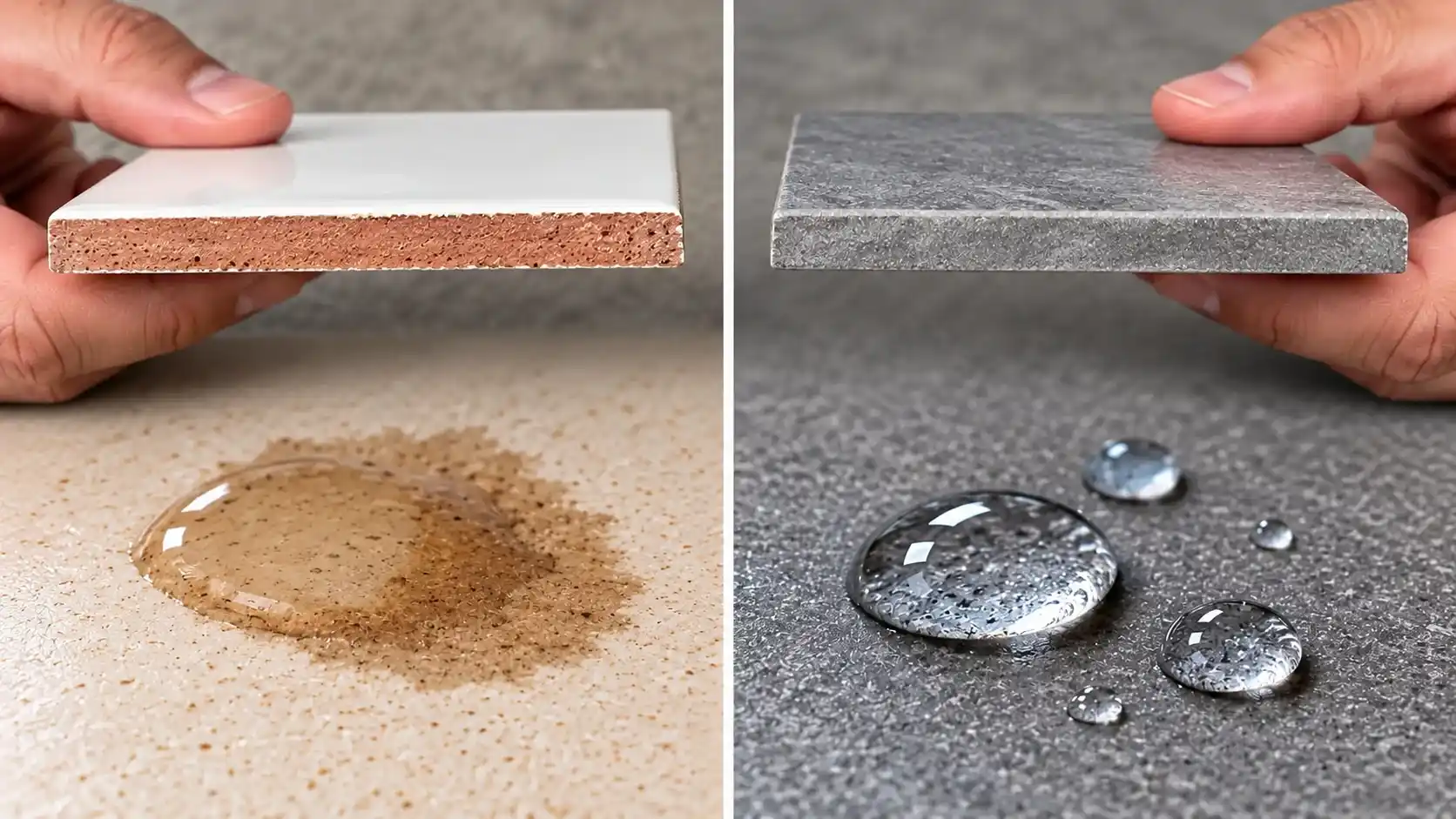
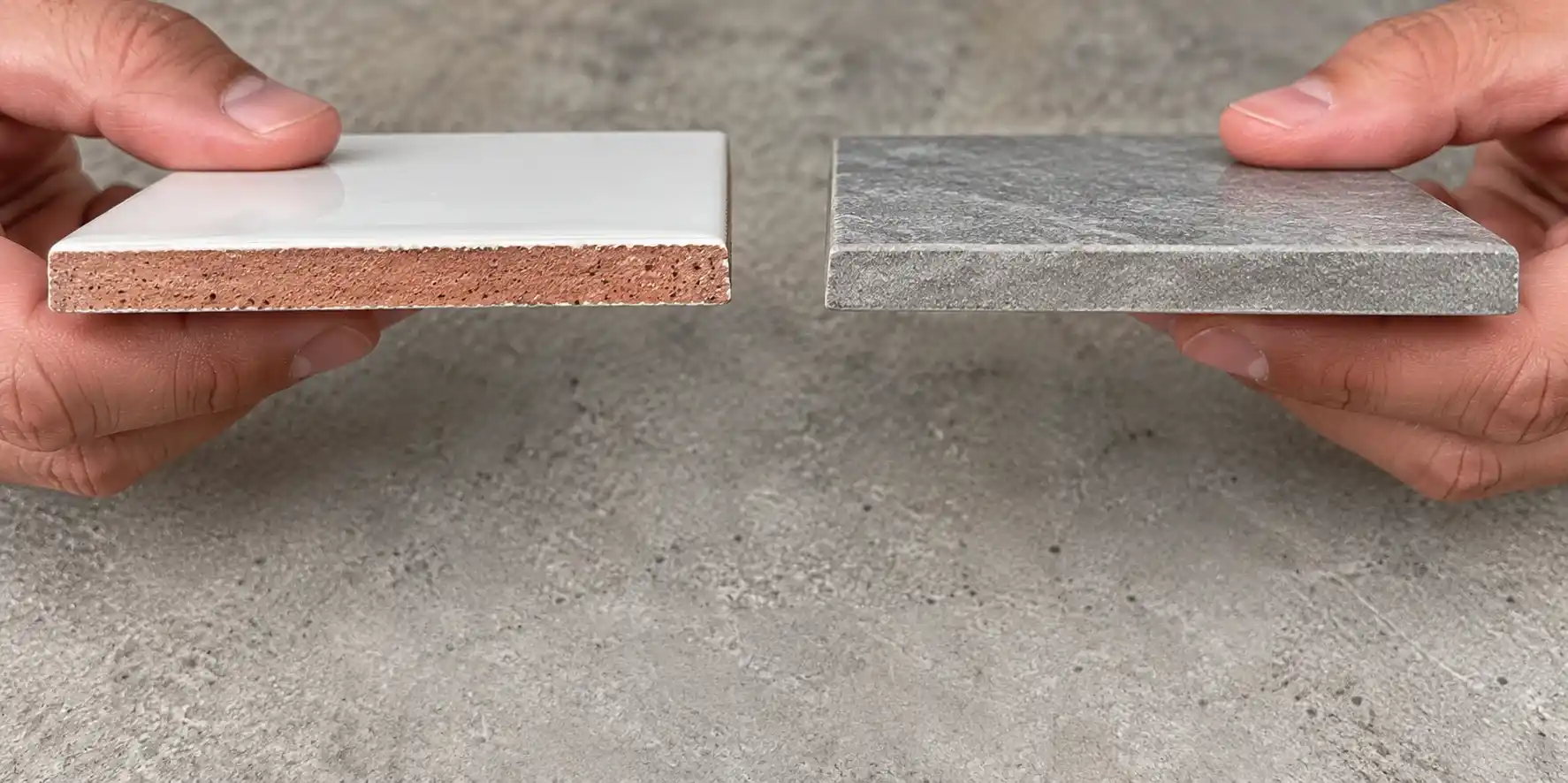
Porcelain is a type of ceramic tile. It’s made from finer clay and fired hotter, which makes it denser. Under the common ANSI/ISO test standards, a tile counts as porcelain when it absorbs about 0.5% water or less. Standard ceramic absorbs more. That’s the real technical dividing line.
The short verdict: choose porcelain for most bathroom floors, especially showers, family bathrooms, and anywhere water tends to sit. Ceramic is perfectly sensible on walls, and on low-traffic, dry floors when the budget is tight.
Quick takeaways
- Porcelain absorbs far less water and wears better. Ceramic costs less and cuts more easily.
- Slip resistance comes from the finish, not the material.
- A stiff, flat subfloor prevents more cracked tile than any upgrade in tile type.
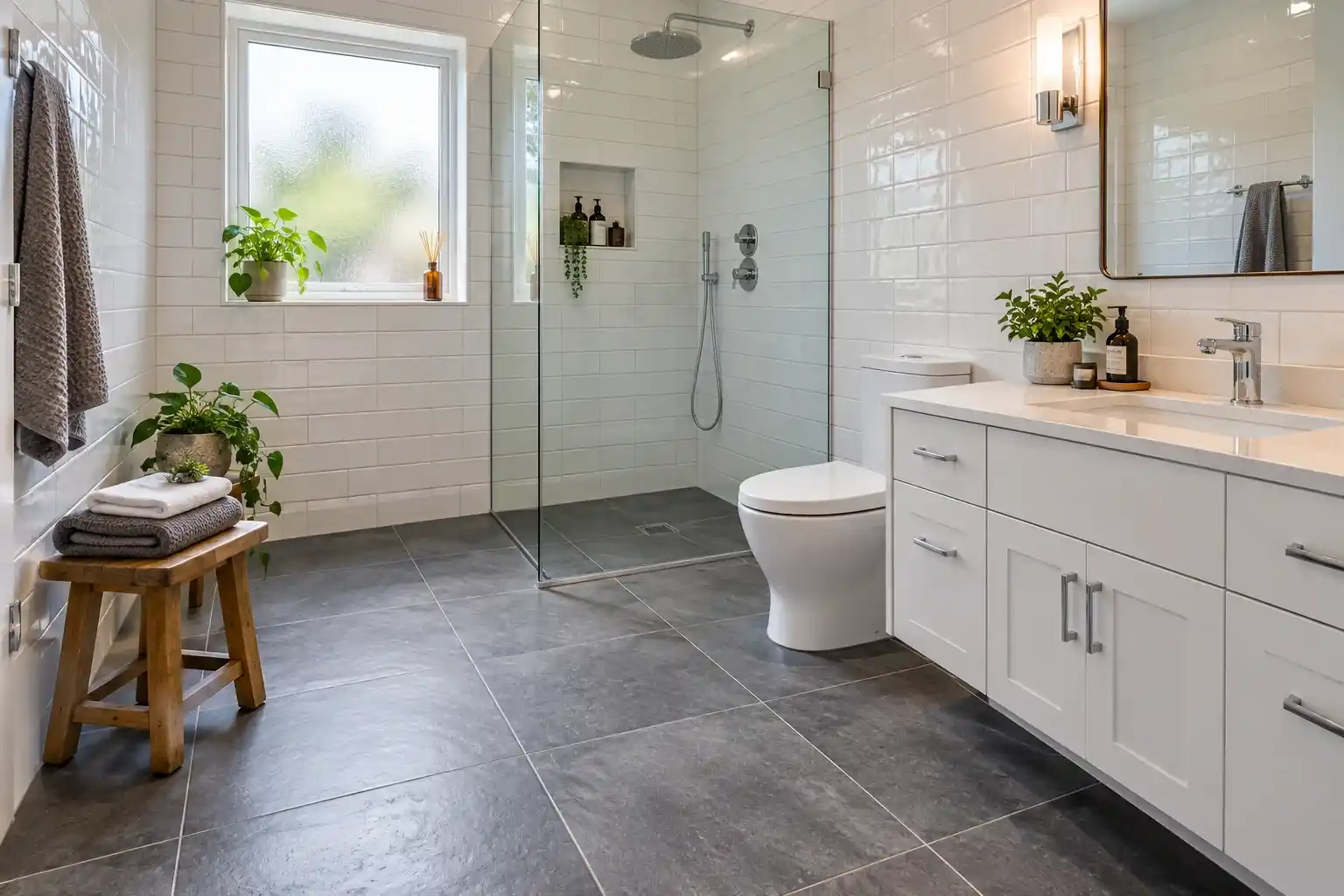
- Ceramic on the walls and porcelain on the floor is a common, sensible split.
- Work out the finished floor height before you order anything.
What really decides whether a bathroom floor tile lasts
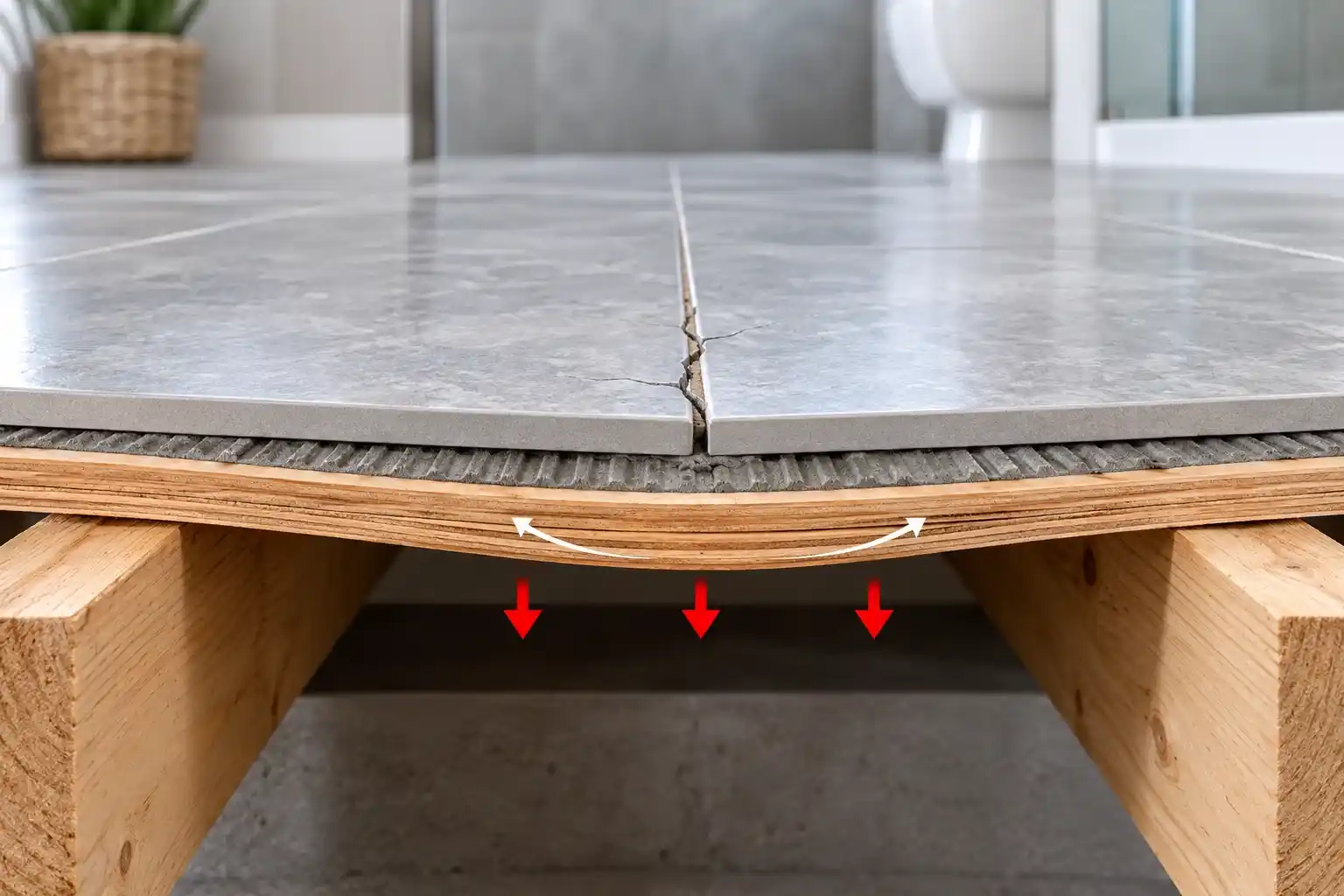
Most people assume cracked tile means cheap tile. In practice, the floor underneath is the usual culprit. Three things matter more than the material itself.
1. The subfloor. Timber floors flex. Tile and grout don’t. When a floor bounces underfoot, that movement has to go somewhere, and it shows up as hairline cracks along grout lines and, eventually, through the tiles. Concrete slabs are stiffer, but they bring their own issues: uneven patches and moisture.
⚠️ Warning: Do not tile over a floor that moves. If it bounces or creaks, stiffen or replace the subfloor first. Switching to a “tougher” tile will not fix it.
2. The finish. Most homeowners don’t realize that “floor tile” on the box says nothing about wet grip. Polished porcelain can turn treacherous with soap film and wet feet, while a textured ceramic may hold better. Look for a wet-use slip rating: DCOF under ANSI A326.3 is common in the US and Canada, the UK uses pendulum test values, and Australia uses AS 4586 slip classes. Ask your supplier, and verify any requirements with your local building authority.
⚠️ Warning: Polished is not the same as safe. For a bathroom floor, lean toward a matt or textured finish, whatever the material.
3. The installation. Full adhesive coverage under each tile, proper waterproofing in wet zones, and well-packed grout joints do more for longevity than the tile’s label. Grout lines are usually where moisture finds its way in first.
Side by side: how the two compare on a bathroom floor
| Factor | Porcelain | Ceramic | What it means underfoot |
|---|---|---|---|
| Water absorption | About 0.5% or less | Higher, varies by product | Porcelain is safer in showers and wet zones |
| Wear and chipping | Denser, tougher | Softer; glaze can wear | Porcelain suits busy family bathrooms |
| Weight and thickness | Often thicker and heavier | Usually lighter | Matters on timber floors and for floor height |
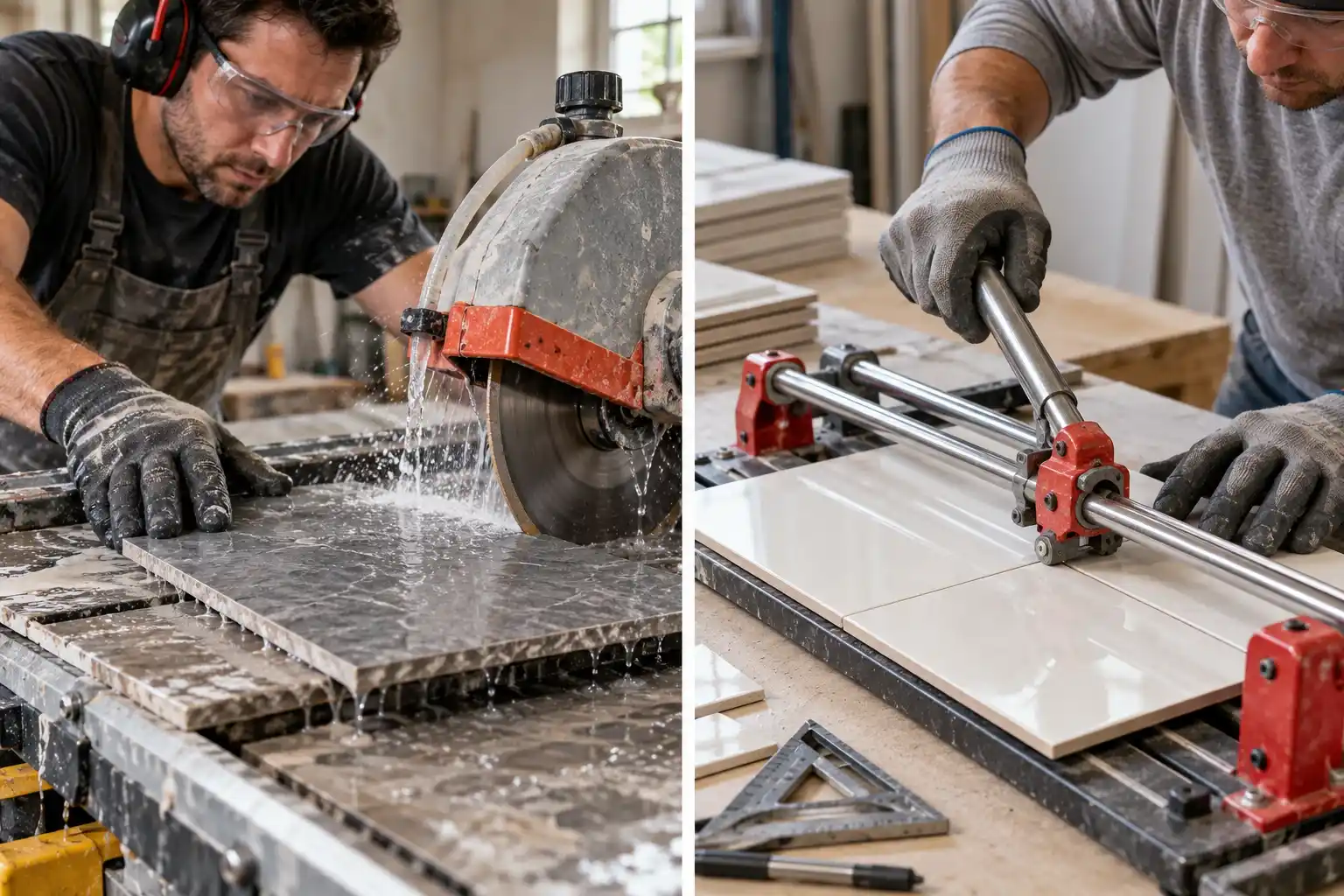
| Cutting and drilling | Harder, needs diamond blades | Easier to cut | Ceramic is friendlier for DIY |
| Slip resistance | Depends on finish | Depends on finish | Read the rating, not the material |
| Typical cost | Higher | Lower | See the cost table below |
| Best use | Floors, showers, high traffic | Walls, dry low-traffic floors | Mix them to save money |
One more detail: through-body porcelain (colour runs all the way through) hides chips better than glazed porcelain, which matters if you tend to drop shampoo bottles.
Which is more expensive, and what does the gap look like after installation?
Porcelain costs more to buy. It can also cost more to lay, because it’s harder to cut and drill. But the tile is only part of the bill.
Estimated ranges, USD (actual prices vary widely):
| Line item | Low | Typical | High | What drives the variance |
|---|---|---|---|---|
| Ceramic tile, per sq ft | $1 | $3 | $8 | Quality, size, brand |
| Porcelain tile, per sq ft | $2 | $5 | $15+ | Finish, size, stone or wood look |
| Installation labor, per sq ft | $5 | $10 | $20 | City, tile size, layout, cutting |
| Backer board, membrane, levelling, per sq ft | $1 | $3 | $8 | Subfloor condition, waterproofing |
| Adhesive, grout, sealer, per sq ft | $1 | $2 | $4 | Grout type (epoxy costs more) |
| Removing old flooring, per sq ft | $1 | $3 | $6 | Layers, adhesive type, access |
Here’s what that means in practice. On a 40-square-foot floor at typical prices, the tile difference is roughly $80. Labor, prep, and removal are where the total is really decided, and a tiler may quote higher labor for porcelain. The cheapest tile is not always the cheapest floor.
UK, Canada, and Australia: the UK and Australia price per m², with labor often higher in major cities. Canada is broadly similar to the US, with regional swings. Slab floors with easy access usually cost less than timber upper floors with awkward access.
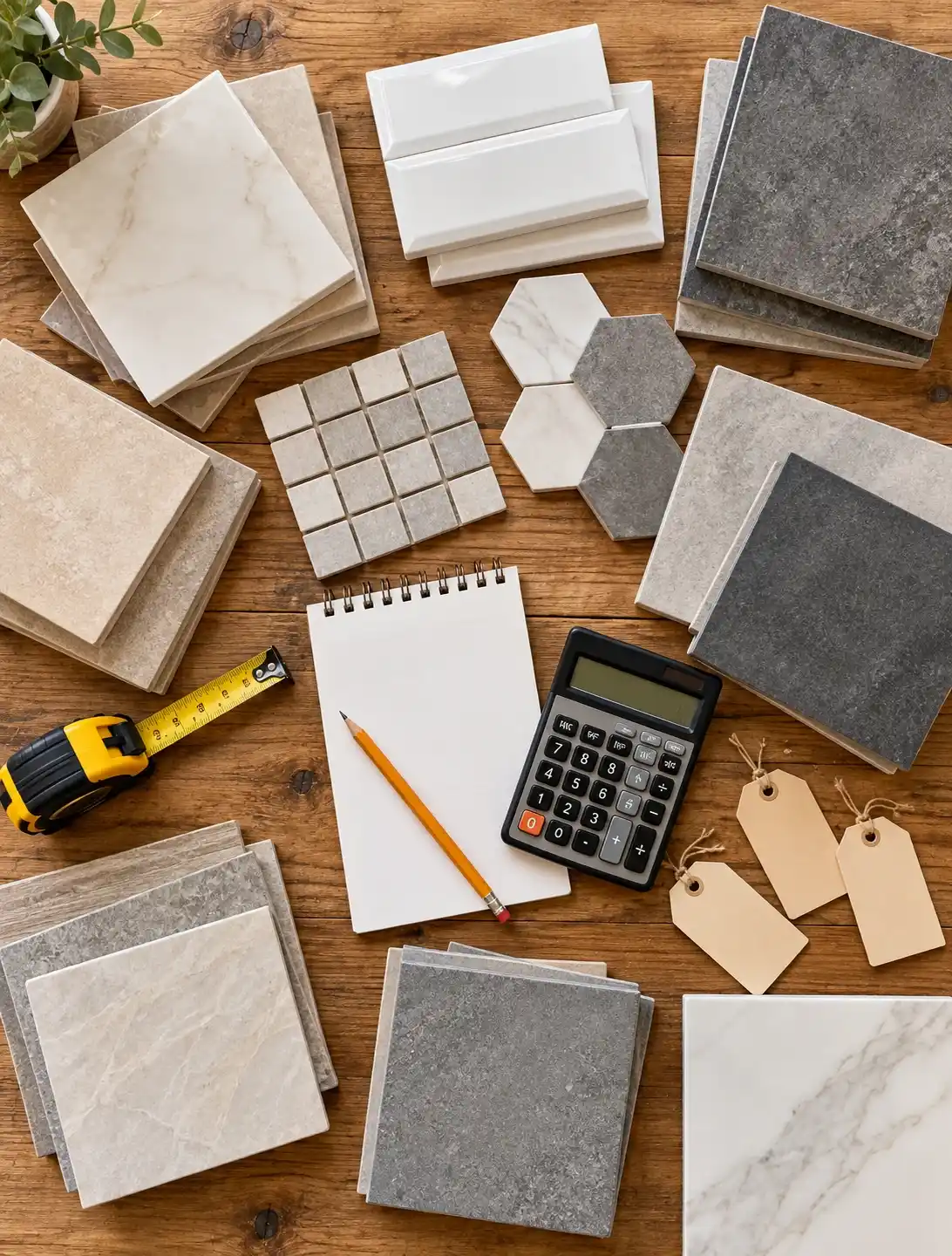
Which one suits which bathroom?
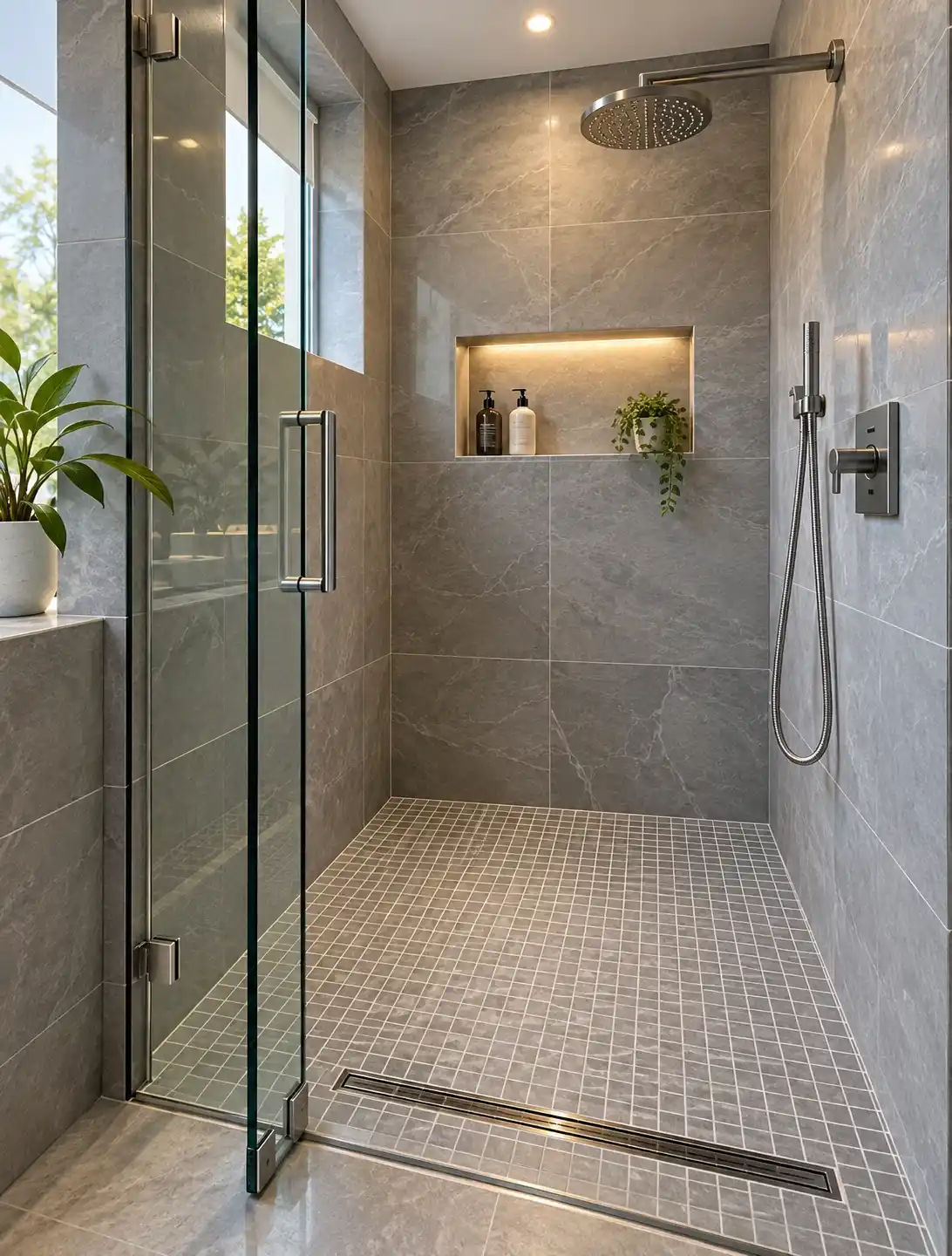
- Shower floor or wet room → small-format porcelain mosaic, so the tile can follow the slope, with proper waterproofing below.
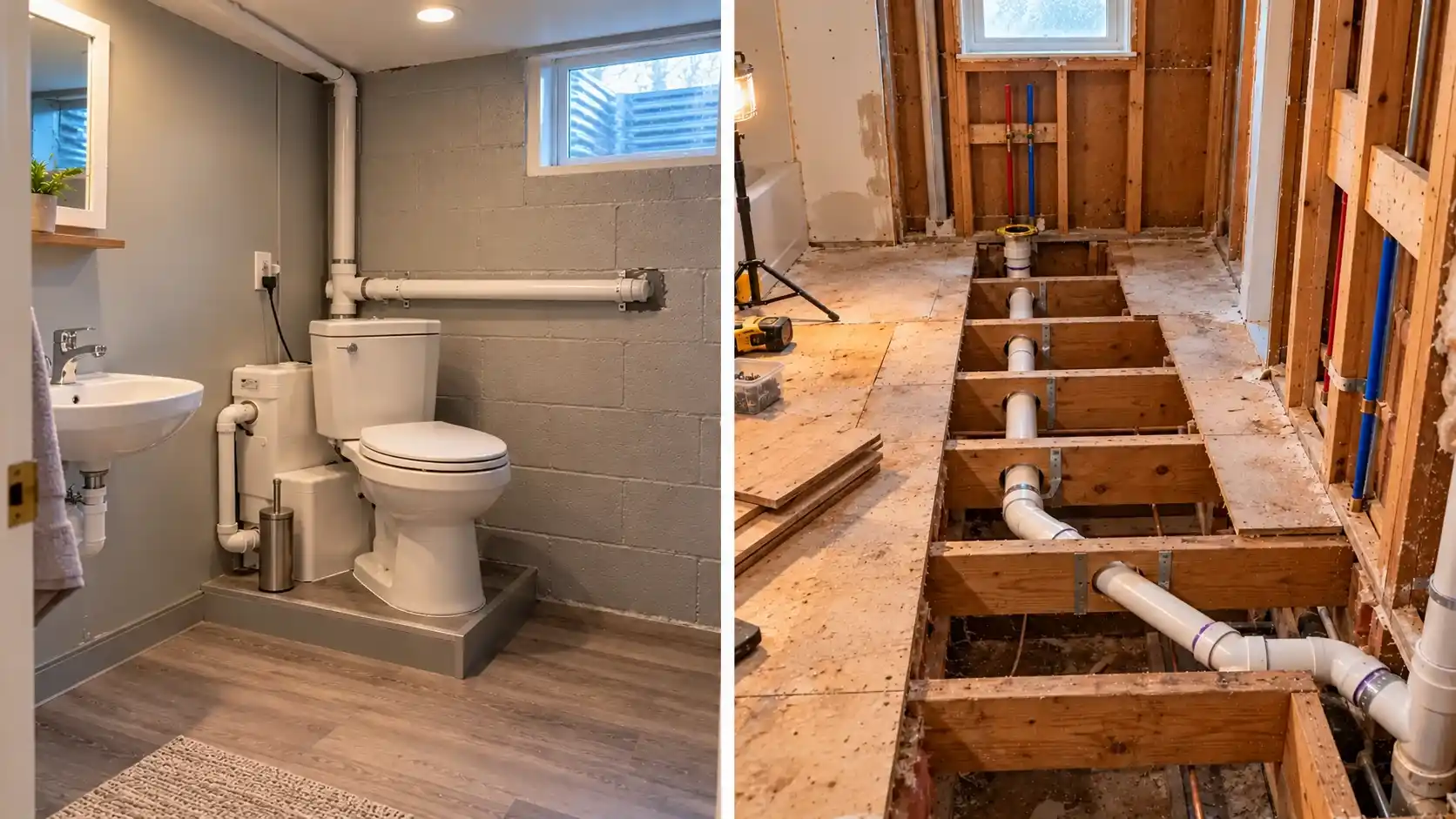
- Upstairs bathroom on timber joists → get the floor assessed first. Ask a builder or engineer if it feels bouncy.
- Concrete slab → porcelain is straightforward. Check flatness and moisture before you tile.
- Tight budget, dry low-traffic room → floor-rated ceramic works with good prep.
- Wood-look or stone-look finish → porcelain gives the widest range of durable options.
- Children, older adults, or lots of wet feet → pick a textured finish with a suitable wet slip rating.
- Underfloor heating → both tile types work. Use a qualified electrician, and decide before tiling, because adding it later means ripping up the floor.
What happens to your floor height, doors, and transitions when you tile?
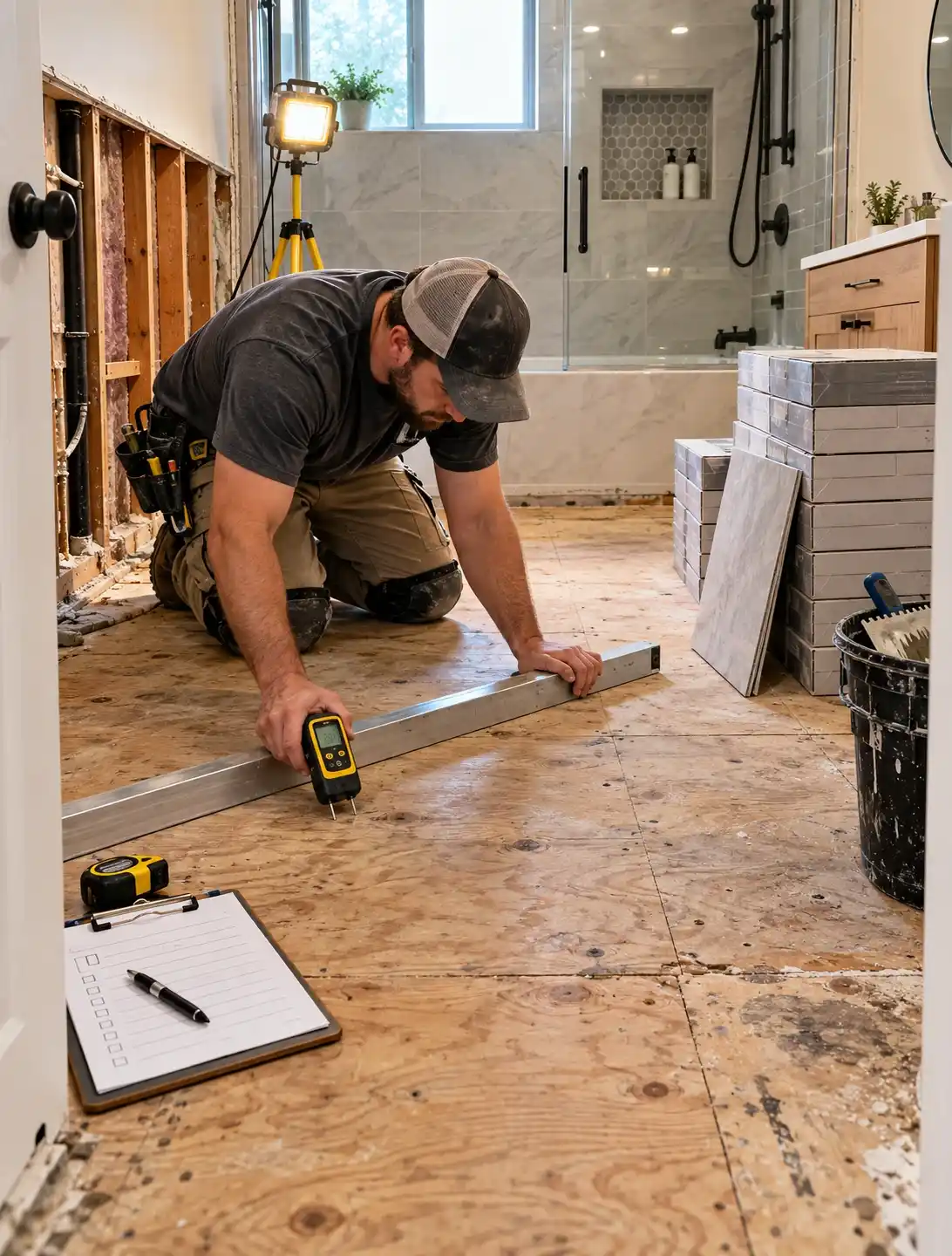
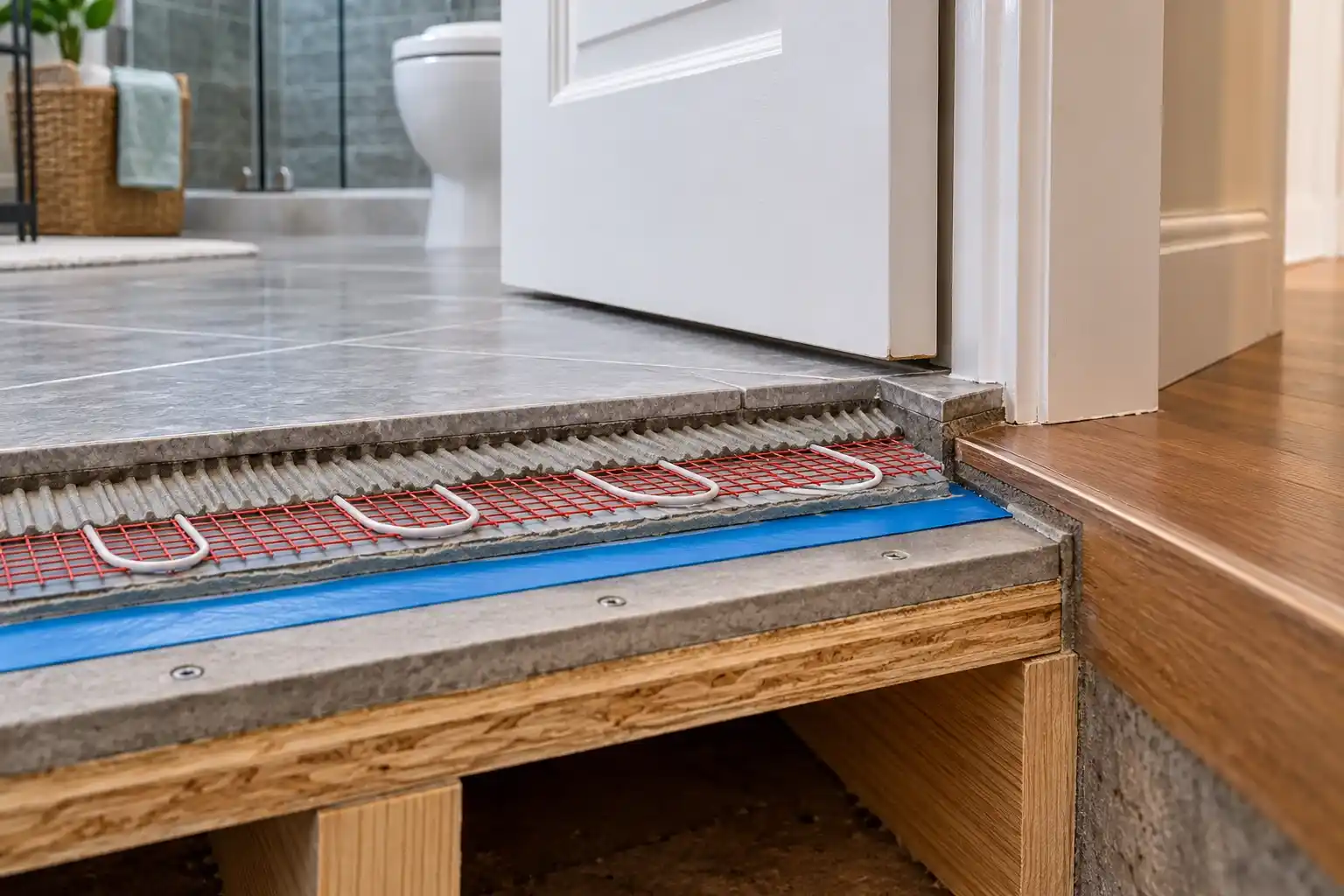
This is the part competitors skip. Tile, adhesive, backer board, membrane, and a heating mat all add height. A bathroom that looked fine on paper can end up with a door that scrapes, a vanity toe-kick that no longer fits, or a small step down into the hallway that someone will trip on at 2 a.m.
The fix is cheap before demolition and expensive after tiling. Run through this first:
- Subfloor type confirmed: concrete slab, plywood on joists, or old boards
- Flatness checked with a long straightedge, dips and humps marked
- Stiffness tested: walk the floor and note bounce or creaks
- Joist spacing and direction noted
- Soft spots, stains, or old leaks inspected and fixed
- Total build-up added up and compared with the door gap and neighbouring floor
- Shower and wet zones identified for waterproofing and small-format tile
- Permit rules checked with your local building authority
A long straightedge and a self-levelling compound are cheap tools. Discovering a dip after the tile is down is not.
When to stop and call a tiler, builder, or engineer
Some problems are worth a professional opinion before you spend on tile.
| Problem | Who to call | Why DIY is risky |
|---|---|---|
| Bouncy or flexing floor | Builder or structural engineer | Tile will crack, and framing changes may need approval |
| Large uneven areas or slab issues | Tiler or flooring contractor | Flatness work affects the whole result |
| Shower pan, sloped floor, waterproofing | Licensed tiler or waterproofing specialist | Leaks stay hidden, and many regions require certified work |
| Underfloor heating | Electrician and tiler | Electrical safety, GFCI/RCD protection, warranty |
| Hidden damp, rot, or mould | Builder, plumber, or damp specialist | Tiling over damage hides the problem |
| Changing doors or thresholds | Carpenter or builder | Floor height changes affect fit and accessibility |
Frequently asked questions
Is porcelain or ceramic tile better for a bathroom floor?
Porcelain is usually better because it’s denser and absorbs much less water, so it copes with wet areas and heavy use. Ceramic suits walls and low-traffic dry floors, especially on a budget. Either way, a stiff, flat subfloor and a slip-resistant finish matter as much as the material.
Which is more expensive, porcelain or ceramic tile?
Porcelain, usually, both to buy and sometimes to install, since it’s harder to cut and drill. On a small floor, though, the tile gap is often modest next to labor, backer board, and prep. Prices vary by region and tiler, so get several quotes.
Can you use ceramic tile on a bathroom floor?
Yes, if it’s rated for floor use and the bathroom is dry and low-traffic. Wall-only ceramic is thinner and not made for foot traffic. For showers and wet rooms, porcelain is the safer choice. Confirm the tile’s intended use before buying.
Is porcelain tile slippery in a bathroom?
It can be, but it doesn’t have to be. Slip resistance depends on the surface finish, not the material. Polished tile is slipperier when wet, while matt or textured finishes grip better. Check the rating used locally (DCOF, pendulum value, or AS 4586) and ask for wet-use figures.
Can I tile a bathroom floor upstairs with a timber subfloor?
Often yes, if the floor is stiff and flat enough. Timber flexes more than concrete, and flex cracks tile and grout. A builder or tiler can check joist size, spacing, and subfloor thickness. Verify any structural requirements with your local building authority.
What tile is best for a shower floor?
Small-format tile, such as porcelain mosaics. The small pieces follow the slope toward the drain, and the extra grout adds grip. Large tiles can’t follow a sloped pan. The floor also needs proper waterproofing beneath, which is a licensed trade in many regions, so check local rules.
.webp)
 (1).webp)
.webp)