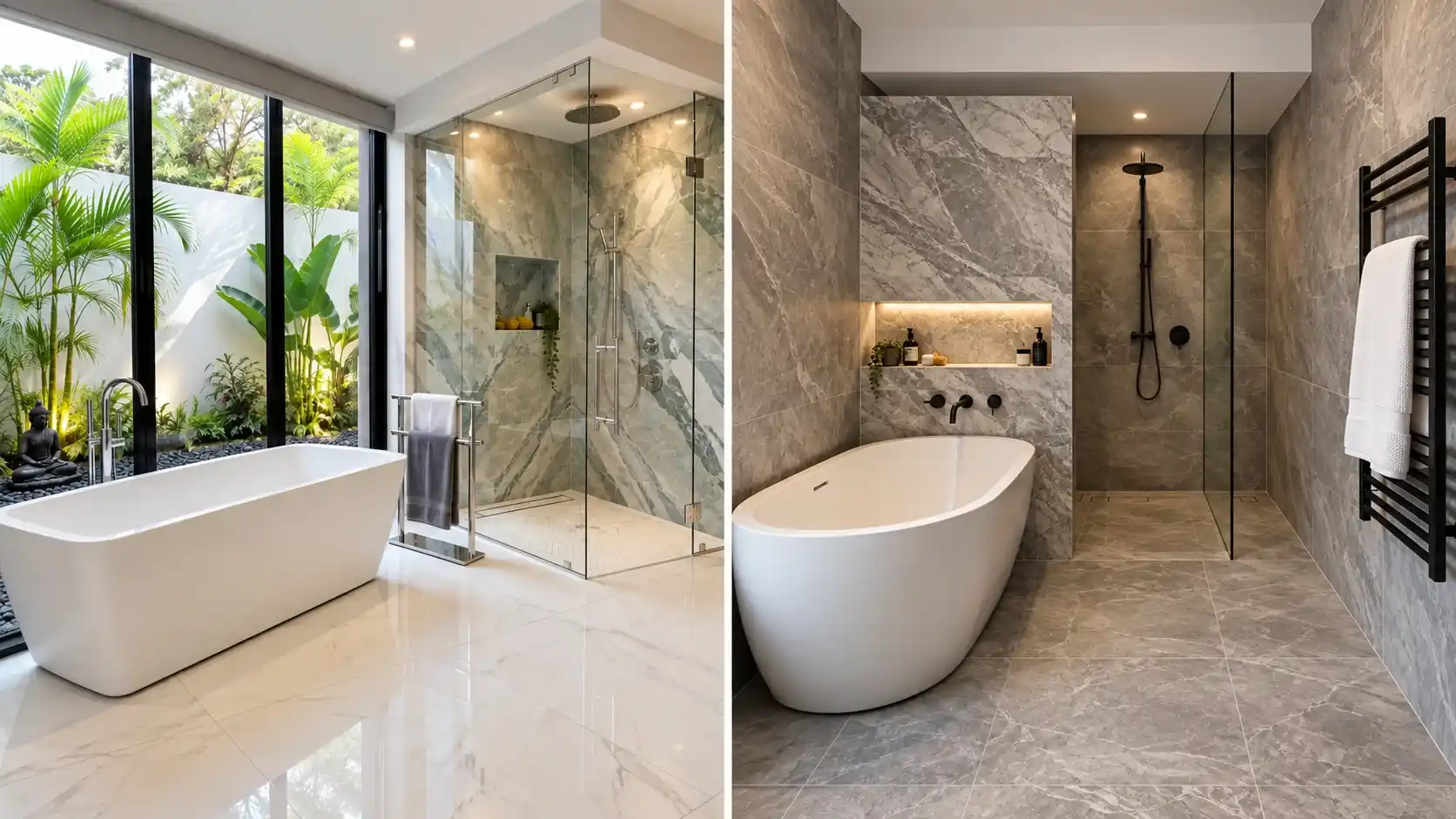
Quick answer: A minimalist bathroom uses a restrained palette, clean-lined fixtures, concealed storage, and very few visible objects. The look depends on hiding clutter and choosing quality materials with simple shapes, so the room reads calm rather than unfinished.
Quick Takeaways
- Limit the palette to two or three related tones, and let texture carry the interest.
- Hide storage behind flat-front doors or in recessed niches so the counters stay clear.
- Choose large-format tile with narrow grout lines to reduce visible joints.
- Use wall-mounted or floating fixtures where possible, and budget for the blocking and plumbing they need.
- Layer your lighting. Ceiling downlights alone make most minimalist bathrooms feel flat.
- Plan for upkeep. A bare room shows every splash, smudge, and water mark.
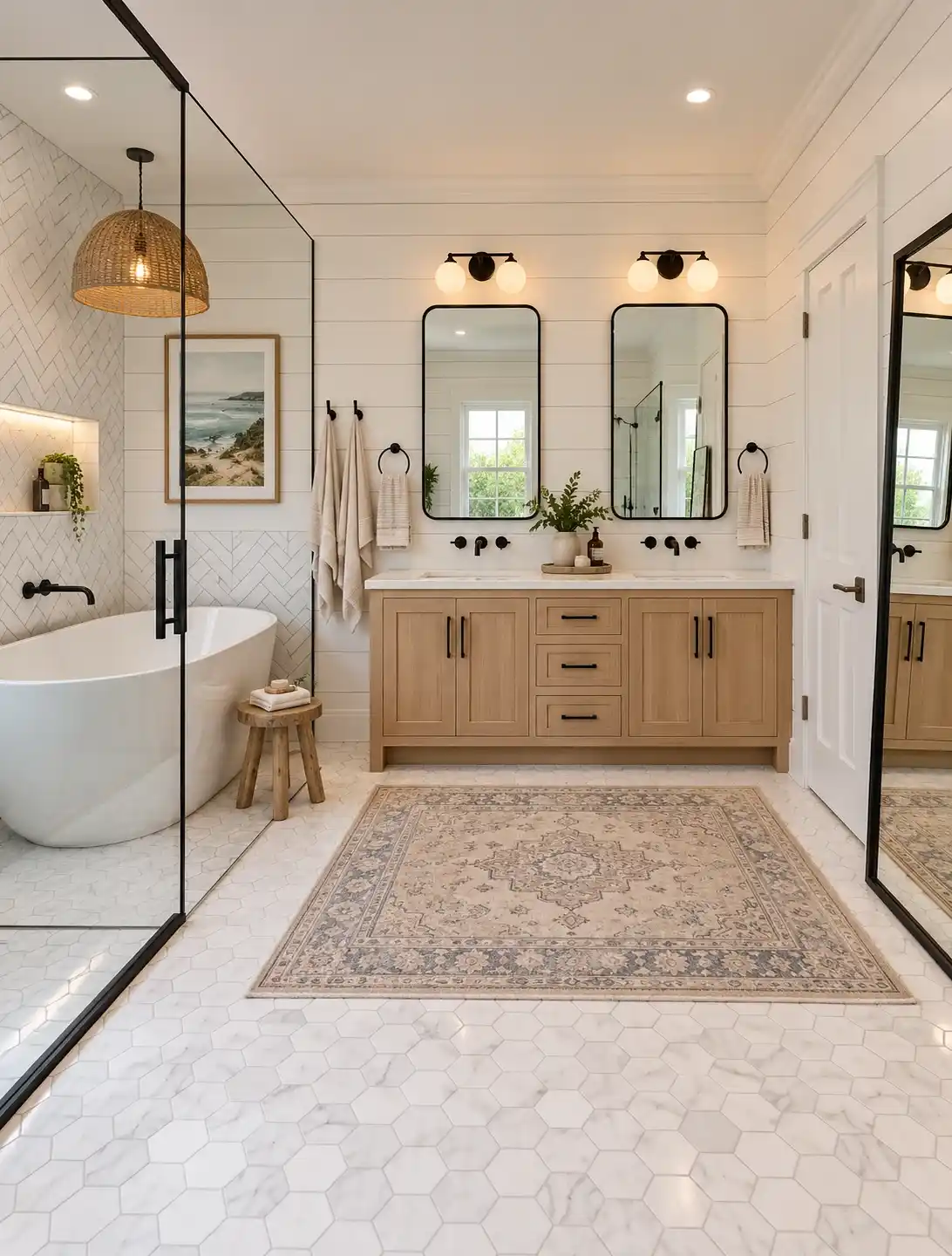
What Minimalism Actually Requires
Most people picture a minimalist bathroom as a room with less stuff in it. That’s true, but it leaves out the part that makes the look work. A minimalist bathroom takes more planning than a busy one, not less.
When a bathroom looks effortless, it usually means three things happened behind the scenes. The storage was designed to disappear. The tile joins were laid out so they don’t break up the surfaces. The fixtures were installed so their edges sit flush with the walls and tile. None of that happens by accident, and none of it is cheap.
The discipline also has to continue after the renovation is finished. A toothbrush cup on the edge of the vanity, a rack of shampoo bottles in the shower, or a stack of folded towels on an open shelf can undo the whole effect in seconds. Many homeowners find that the first month looks exactly as planned, and then the everyday objects slowly return. Planning for those objects before construction is what separates a calm room from a cluttered one that happens to be white.
⚠️ Warning: Plan the storage before you choose the finishes. The most common reason a minimalist bathroom fails is that the homeowner didn’t allow enough hidden storage. Count the daily items each person uses, then design a recessed niche, a drawer, or a closed cabinet for each one. If you add storage after the tile is set, the options are limited and usually more expensive.
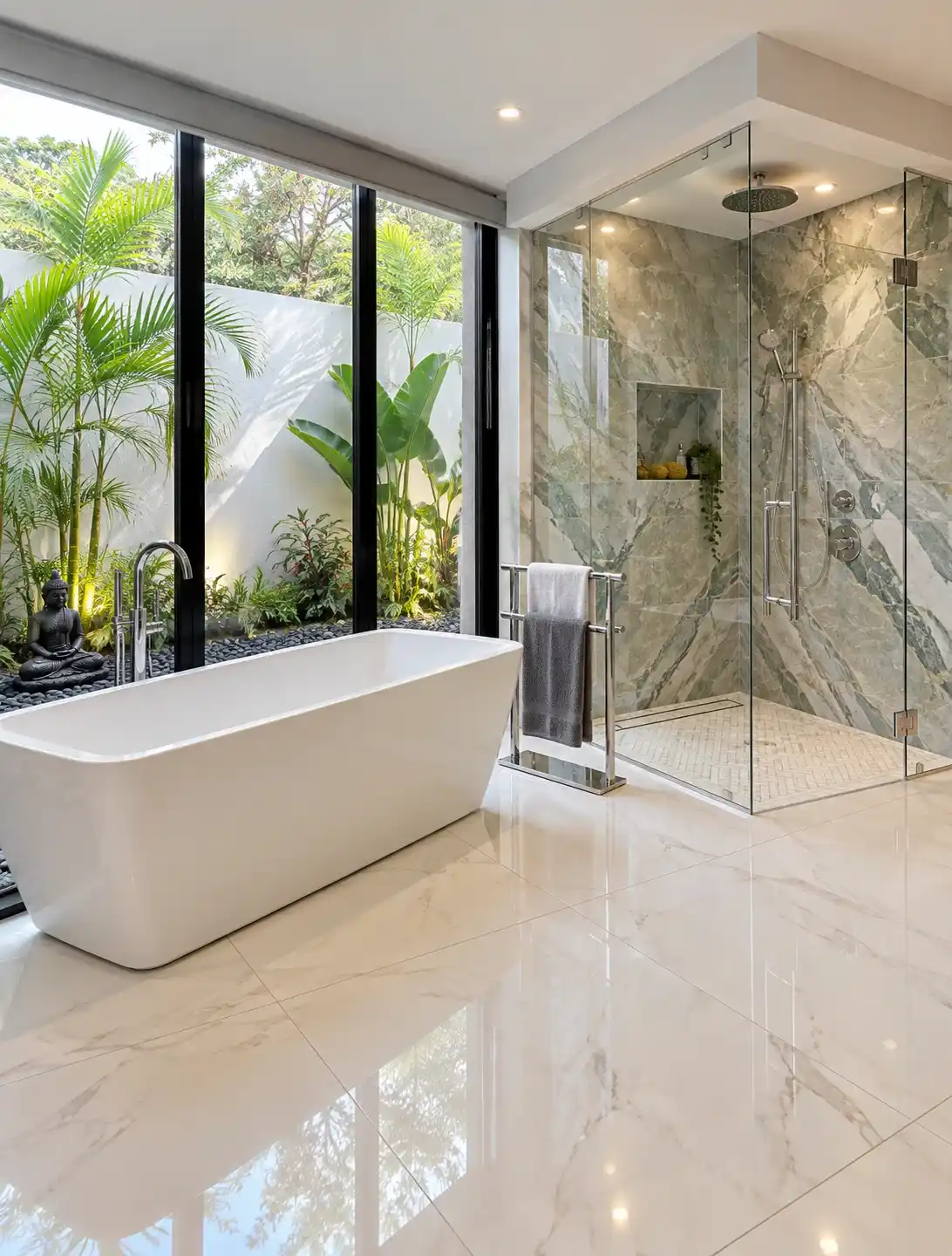
Design Elements Breakdown
The look comes from a handful of decisions that interact with each other. Tile affects grout, grout affects how big the tile field looks, and lighting changes how every color reads. It helps to think through the elements in the order they affect the room.
Floor and Wall Tile
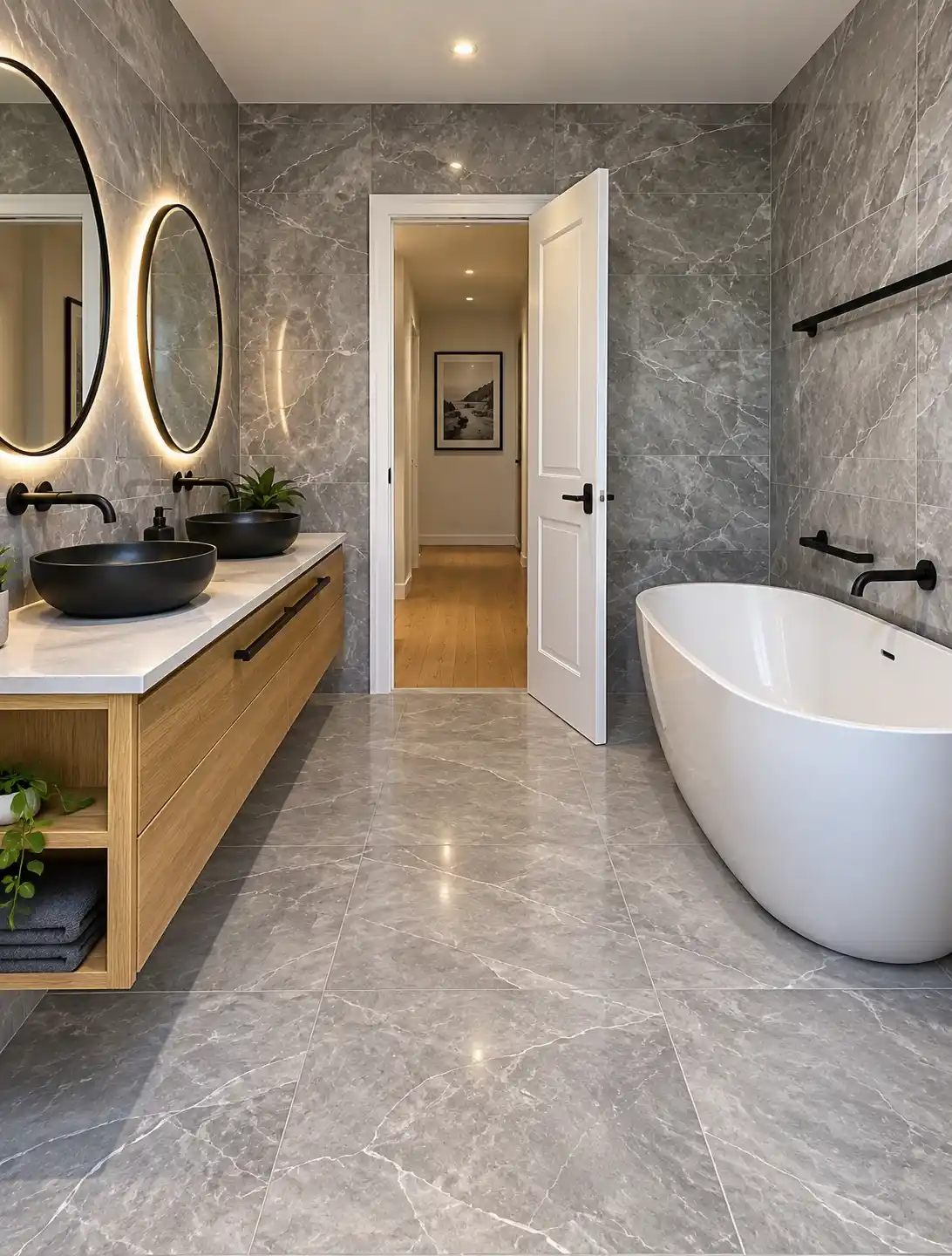
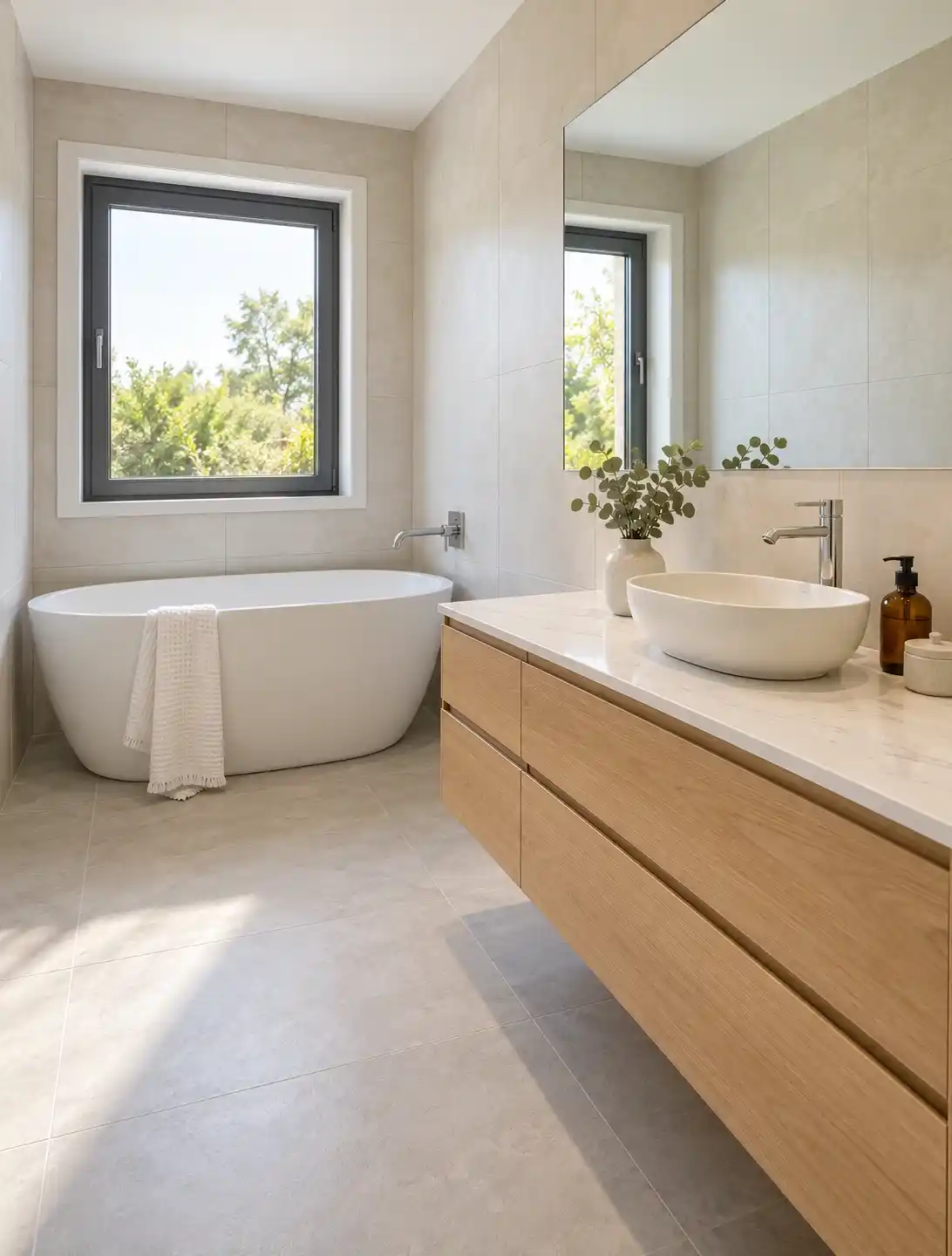
Large-format porcelain is the workhorse of minimalist bathrooms. Fewer joints mean fewer visual breaks, and the surface reads as one continuous plane. Rectified tile, which has been ground so its edges are square, lets installers set very narrow joints. That is what gives a clean, seamless look.
The trade-off is installation. Large tile needs a flat subfloor and a skilled setter. Small variations in the floor show up quickly on a large tile, and any lippage (one tile sitting higher than its neighbor) is much more visible than it would be with smaller tile. Expect the installer to spend more time on preparation, and expect the labor line to grow.
Finish matters as much as size. Polished tile looks sharp when it’s new, but it shows water spots, soap film, and footprints clearly, and it can be slippery when wet. A matte or lightly textured surface hides water marks better and gives better grip. Textured tile does collect grit, so it needs a quick vacuum before mopping.
Slip ratings are not optional for a bathroom floor. In the United States, look for a dynamic coefficient of friction (DCOF) rating that meets the ANSI A326.3 standard for wet areas. In Australia and New Zealand, check the R-rating under AS/NZS 4586. In the UK, look for a pendulum test value from the BS 7976 method. Ask your installer to confirm the tile is suitable for barefoot use in wet areas before it’s ordered.
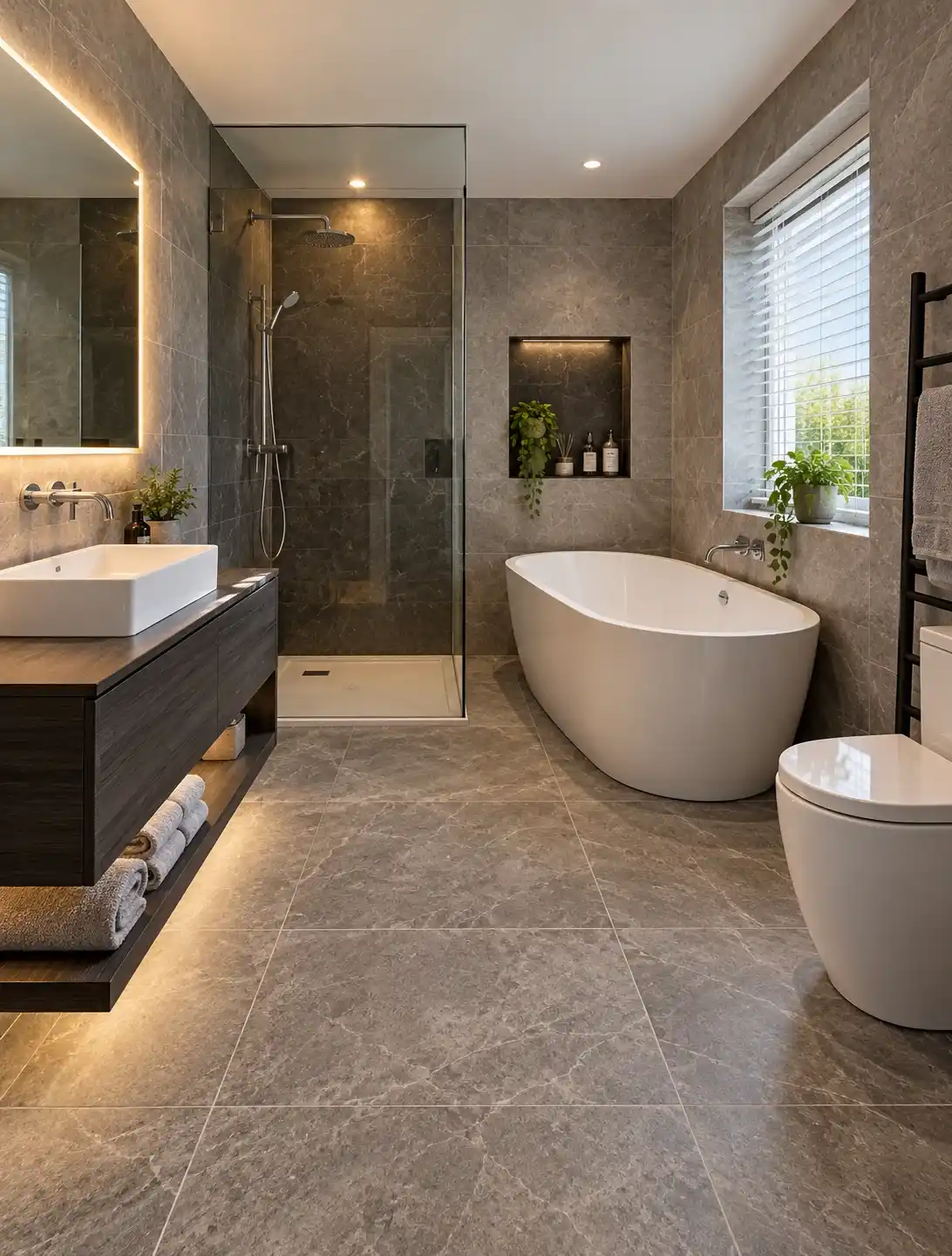
Grout
Grout is the element most people underestimate. It is also the one that changes the room’s visual size the most. When the grout contrasts sharply with the tile, the joints create a visible grid, and the room starts to look broken into pieces. When the grout matches the tile, or sits close to it in tone, the joints recede and the surface reads as larger and quieter.
Stark white grout on dark tile is the classic mistake. It looks crisp in the showroom and then shows every line in daily use. Light grout also shows dirt faster than mid-tone grout, so it asks for more regular cleaning.
Epoxy grout resists staining and doesn’t need sealing, but it costs more and is harder to work with. Cementitious grout is cheaper and more forgiving to install, but it needs sealing and periodic care. For a minimalist look in a wet area, many installers recommend epoxy in high-use zones like showers, though the cost difference should be weighed against the rest of the budget.
Vanity and Storage
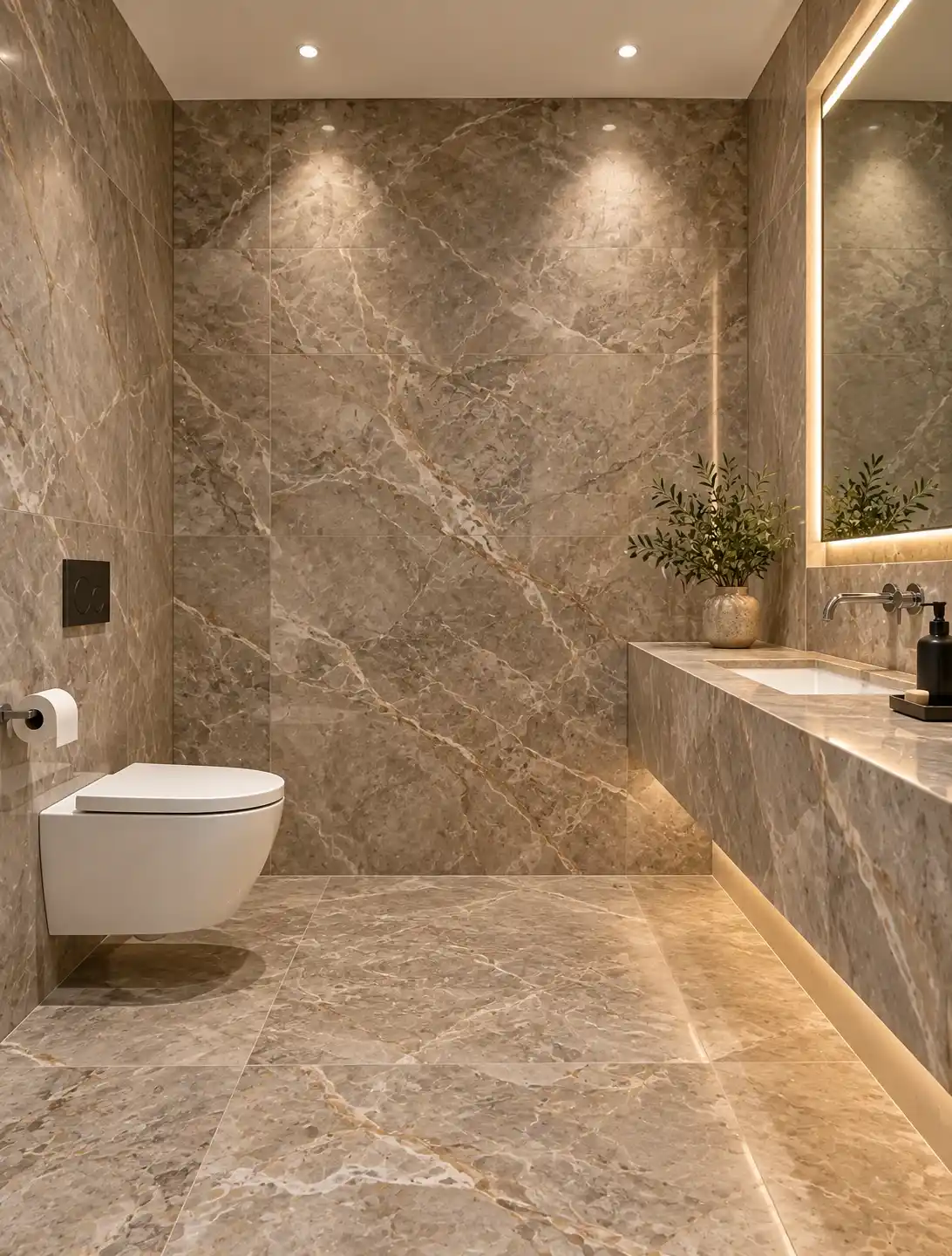
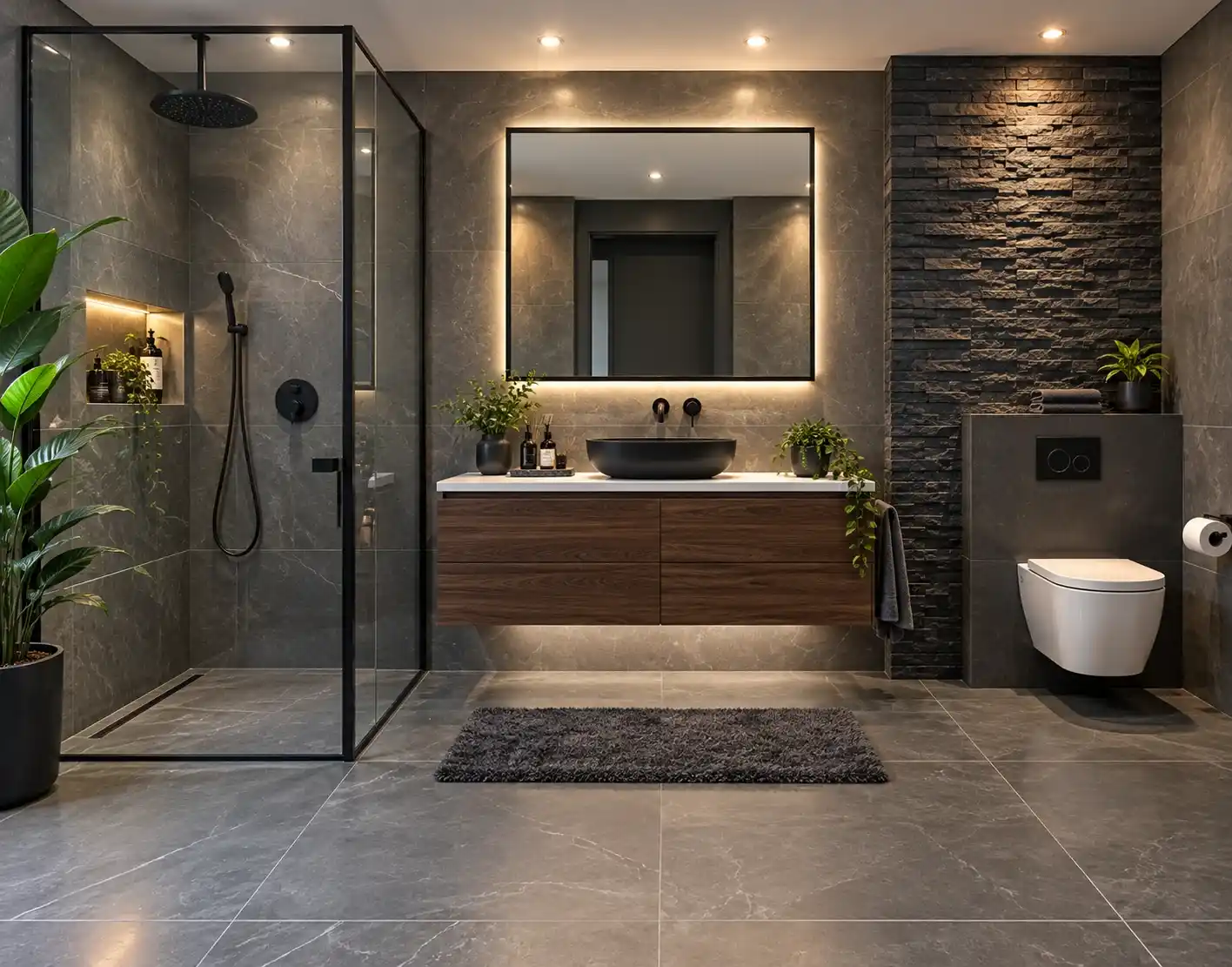
A floating vanity is the most recognizable piece of a minimalist bathroom. Mounted off the floor, it shows more of the wall and floor beneath, which makes the room feel bigger. It also makes cleaning easier, since you can wipe under the cabinet without moving anything.
The vanity’s finish should blend into the wall rather than draw the eye. Warm white, greige, soft oak veneer, and muted matte tones all work. Glossy lacquer, especially in dark colors, shows water rings, fingerprints, and the smudges that come from every morning routine. Plan to wipe the front after each use if you choose glossy finishes.
Storage is where the look is won or lost. Flat-front drawers and doors with push-to-open or recessed pulls keep the front clean. Inside, dividers keep the everyday items organized so the drawer doesn’t become a jumble. Recessed wall niches work well in showers and beside the mirror, but they must be framed and waterproofed correctly before tiling. A niche cut into a wall without proper membrane is a leak waiting to happen.
Many homeowners underestimate how much storage a bathroom needs. Count the items for every person in the household, including the ones kept in the shower and the towels and cleaning supplies. If there isn’t room for them behind closed doors, the minimalist look will not survive.
Faucets, Valves, and Fixtures
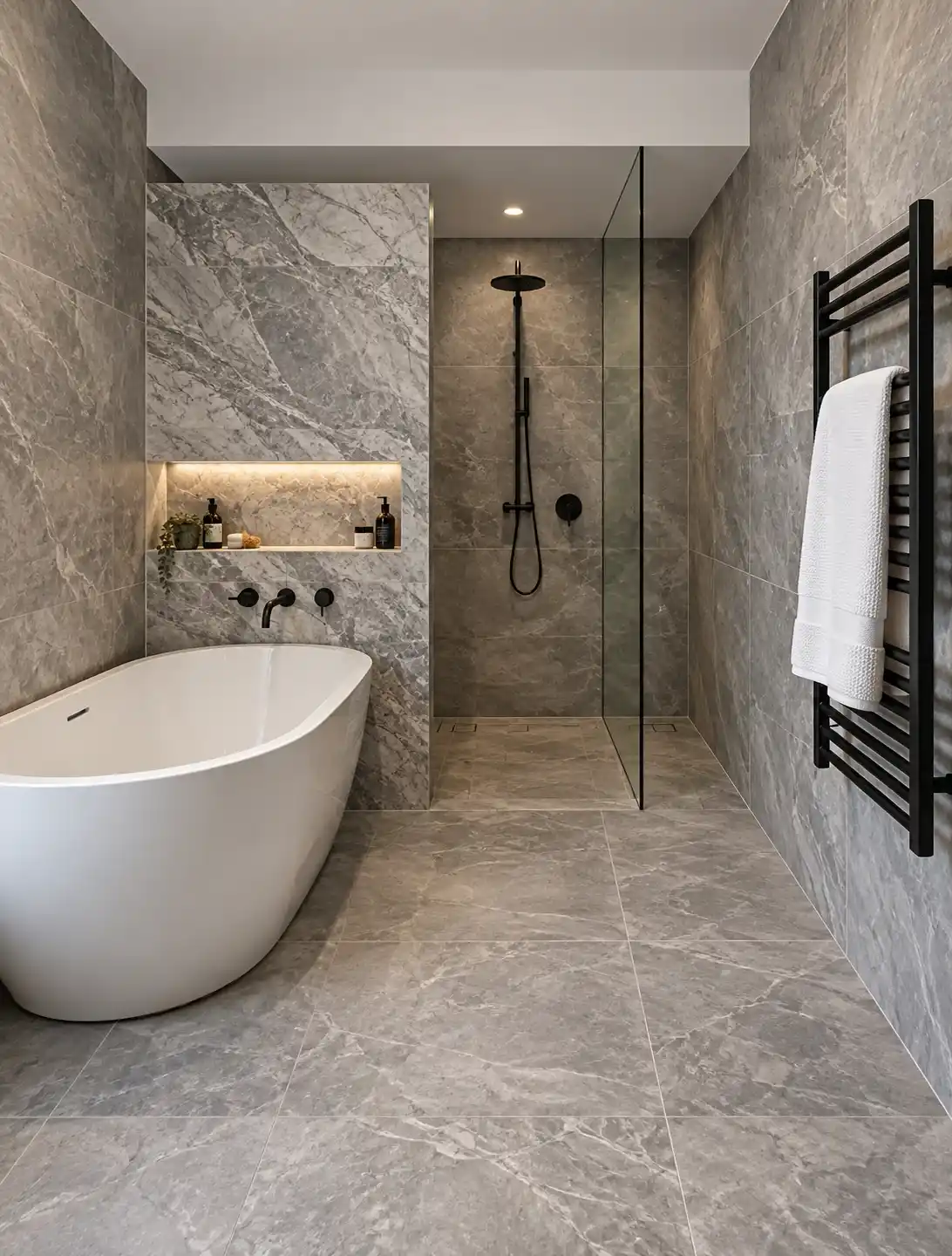
Minimalist fixtures tend to be simple in shape, with few decorative details and no visible hardware where possible. Wall-mounted faucets and concealed thermostatic valves let the wall or tile remain uninterrupted. They are more expensive and require the plumbing to be planned before the wall is closed.
Finish type matters more than the color name. Painted matte black fixtures can look striking when new, but the paint can chip around handles and spouts over time. PVD (physical vapor deposition) finishes bond the metal color to the surface at a microscopic level and resist wear much better. Brushed nickel and brushed brass in a PVD finish are often more forgiving over the long run than painted black.
Hard water changes the picture. Both matte and polished metals show mineral spotting, but in different ways. Matte surfaces can show spotting in a different pattern than chrome, which means a sample should be checked in your own bathroom’s light before buying. Descaling every month or so keeps the spots under control in most hard-water homes.
Toilets
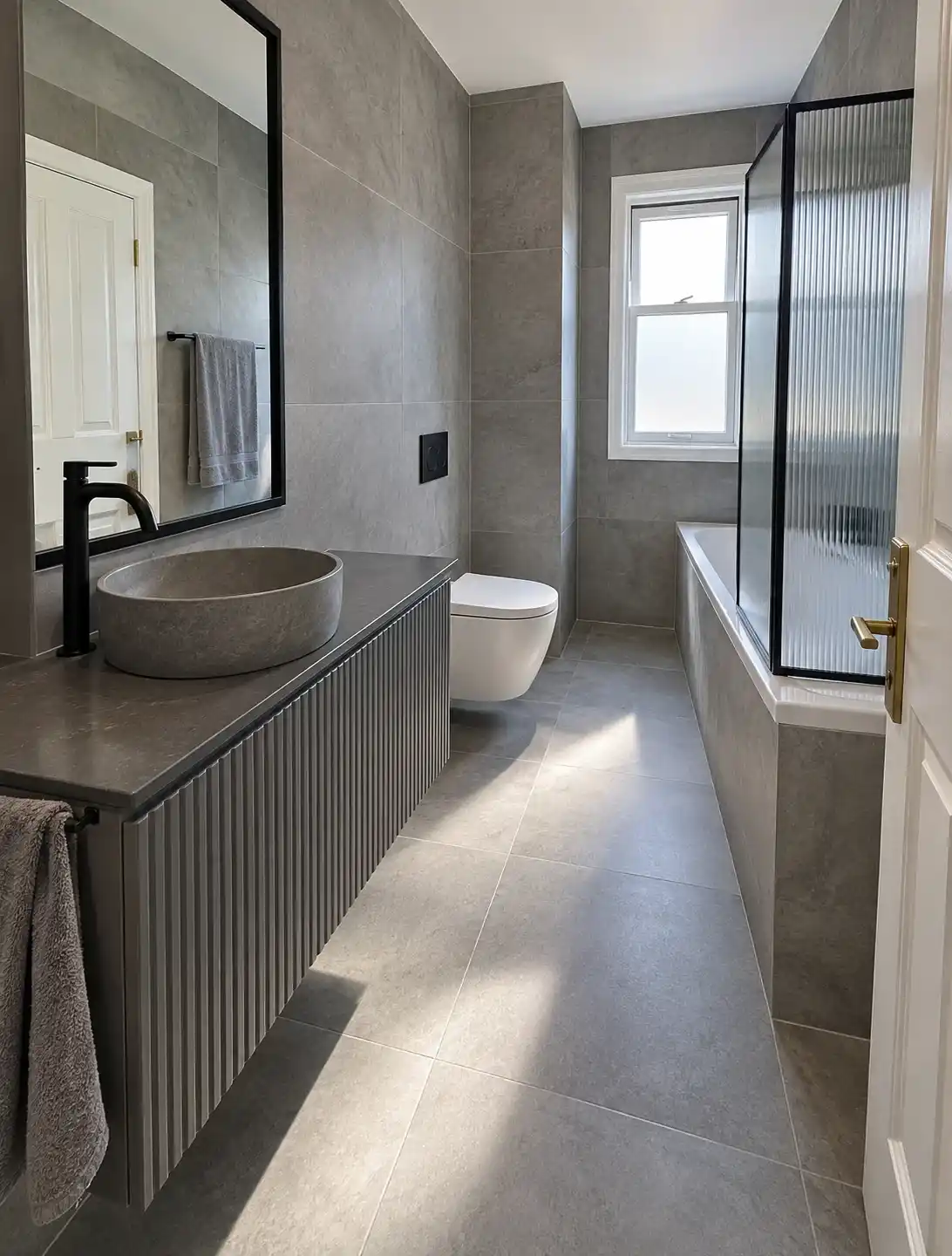
A wall-hung toilet is the most dramatic minimalist upgrade, and also the one that causes the most surprises. The bowl and cistern sit behind the wall, supported by a steel or reinforced carrier frame. That frame must be installed and blocked correctly before the wall is finished.
The gains are real. Floor space opens up, the profile is clean, and cleaning under and behind the bowl is much easier. Repairs, though, require access through the wall or a service panel, and retrofitting into an existing wall is often difficult or impossible. Confirm the frame’s load rating, the access plan, and the plumbing route with a licensed plumber before you commit.
A close-coupled floor-mounted toilet with a simple, flush profile offers much of the look at lower cost and lower risk. For many households, that’s the more practical choice.
Lighting
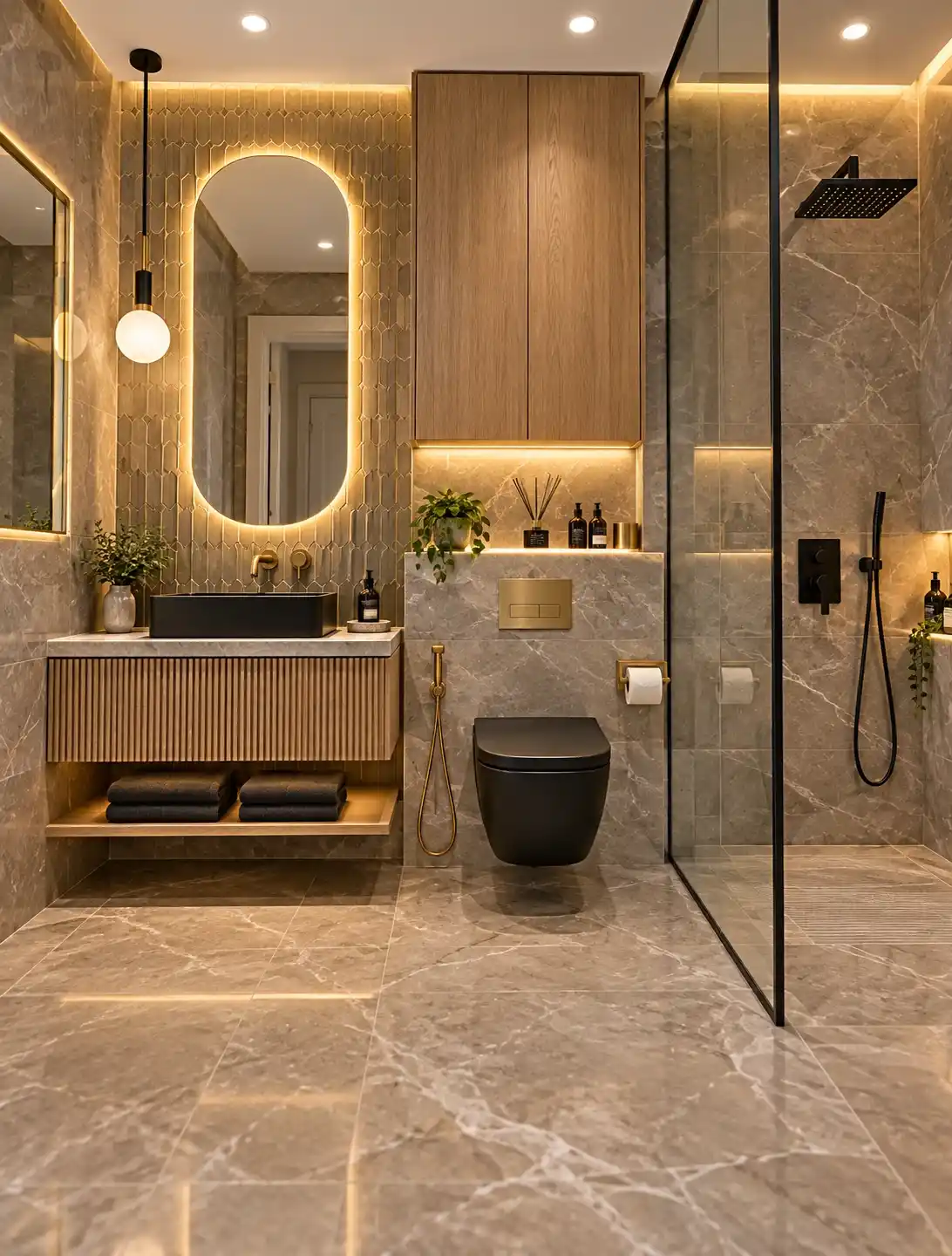
Lighting makes or breaks a minimalist room more than most people expect. Ceiling downlights are common in minimalist bathrooms because they keep the ceiling clean. The problem is that overhead light alone flattens faces, hides texture, and makes the room feel clinical.
Layer the light instead. Wall sconces beside the mirror, or a backlit mirror, provide even light at face height. A dimmable setup lets you lower the output at night, which feels more relaxing and uses less energy.
Color temperature is the other big factor. Warm white LEDs in the 2700K to 3000K range flatter pale tile, natural wood, and soft neutrals. Cool white around 4000K and above can make the same palette look sterile and harsh. Check the color temperature on the box before buying, because the same wattage can produce very different results.
Mirror
A frameless mirror suits a minimalist room, and a backlit version adds useful light without visible fixtures. Look for an LED mirror with a demister pad if you have a shower close to the mirror, since condensation otherwise clouds the glass. A plain large mirror with no lighting can make the room feel flat, so pair it with sconces or a backlight.
Countertop
Solid surface, honed stone, or a flush-mounted sealed top gives a continuous surface that is easy to wipe. Avoid thick edge profiles and bulky backsplashes, which create visual breaks. Natural stone needs regular sealing, and seams should be kept clear of standing water.
Real-World Mistakes That Undermine a Minimalist Bathroom
Most of the problems people run into with minimalist bathrooms don’t show up in photos. They show up after six months of use. These are the ones that come up most often.
- A pale palette with no texture. A single-tone room can look unfinished rather than calm. Add one textured element, such as a lightly ribbed tile, a wood-look vanity, or a linen-look wall finish.
- Visible everyday objects. One toothbrush cup or bottle on the vanity breaks the look. Plan a recessed niche or drawer for these items before the wall is tiled.
- A wall-hung toilet with no carrier frame. A wall-hung toilet needs a frame and solid blocking inside the wall. Retrofitting later is expensive and sometimes impossible, so confirm the frame is in the plan before the wall closes.
- Polished tile on a wet floor. Glossy surfaces become slippery when wet. Check the slip rating for your region before ordering.
- Stark grout on dark tile. White grout around dark tile draws a grid across the floor and walls. Matching or near-matching the grout to the tile keeps the surface continuous.
- Ceiling downlights only. Overhead light alone flattens faces and hides texture. Add wall sconces or a backlit mirror at face height.
- Painted matte black fixtures in hard water. Paint chips over time, and mineral spotting shows clearly on dark finishes. A PVD finish and a monthly descaling routine will serve you better.
- Assuming minimalism is cheaper. The look depends on clean joins, precise tile layout, flush fittings, and concealed plumbing. Those take skilled labor, and the budget needs to reflect that.
Many homeowners also say the same thing after a few months: the room looks wonderful, but it takes more daily attention than the old one. That’s not a reason to avoid the style. It’s a reason to plan for the maintenance before the renovation starts.
_10_11zon.webp "Minimalist Bathroom 10")
Budget Tiers for a Minimalist Look
Minimalism is often presented as the cheaper route, because it seems to involve fewer things. In practice, the look depends on more precise tile work, higher-quality finishes, and concealed plumbing and framing. Labor is usually the largest single cost in the project, often 50 to 65 percent of the total in a mid-range remodel.
The figures below are approximate U.S. ranges for 2026. Published guides vary widely, and prices differ by region, so get at least three local quotes before budgeting.
| Cost Category | Budget ($) | Mid ($$) | Premium ($$$) |
|---|---|---|---|
| Floor tile (about 40–60 sq ft) | $150–$400 | $400–$900 | $900–$2,000 |
| Wall tile | $200–$500 | $500–$1,200 | $1,200–$3,000 |
| Vanity (floating, flat-front) | $400–$800 | $800–$1,800 | $1,800–$4,000 |
| Fixtures (faucet, valve trim, toilet, accessories) | $300–$700 | $700–$1,500 | $1,500–$4,000 |
| Lighting | $100–$300 | $300–$700 | $700–$1,500 |
| Mirror | $100–$250 | $250–$600 | $600–$1,500 |
| Labor (tile and install, plus fixture work) | $2,500–$4,500 | $4,500–$8,000 | $8,000–$15,000 |
| Estimated total | $3,750–$7,450 | $7,450–$14,700 | $14,700–$31,000 |
These totals exclude demolition, permits, plumbing or electrical relocation, structural or waterproofing repairs, and a contingency of 10 to 15 percent. Wall-hung toilets, carrier frames, and linear shower drains add cost beyond the fixture line.
Where the money goes in a minimalist build: Most of the difference between a good minimalist room and a poor one is in the installation, not the materials. A budget that puts all its money into fixtures and leaves little for a skilled tile setter often ends up with the look that was supposed to be the goal.
DIY vs. Professional Work
Some parts of a minimalist bathroom are well within reach of a careful homeowner. Others carry real risk, and a mistake can be expensive or dangerous.
Good candidates for DIY:
- Painting walls and ceilings in warm, low-contrast tones
- Replacing cabinet hardware and adding flush-fit pulls
- Installing a simple floating shelf into proper wall anchors
- Adding a small, pre-fabricated recessed niche in a dry wall, where the framing is simple
- Regrouting an existing floor in good condition
- Adding accessories such as a mirror, a towel bar, or a bath mat in a warm tone
Best left to licensed professionals:
- Wall-hung toilet frames, plumbing relocations, and concealed valves
- Large-format tile installation, which needs a flat subfloor and careful layout
- Electrical work for sconces, dimmers, and new circuits
- Waterproofing membranes behind tile and in shower niches
- Floating vanity installation in masonry, plaster over brick, or any wall with unknown construction
- Structural changes, including wall removal or new drain runs
A useful rule: if a mistake could cause water damage, electrical hazard, or a structural problem, hire it out. Many people try to save money on tile and waterproofing, then pay more to repair damage behind the finished wall.
Maintenance Reality
A minimalist bathroom asks for more daily attention than a busy one. The surfaces are open, the edges are sharp, and every mark is visible. The schedule below is a realistic starting point.
| Task | Frequency | Difficulty | Notes |
|---|---|---|---|
| Wipe vanity front and mirror | Daily | Easy | Water spots and fingerprints are the main upkeep |
| Squeegee or towel-dry shower walls | After each use | Easy | Prevents soap film and limescale on glass and tile |
| Clear surfaces of clutter | Weekly | Easy | Keeps the look intact and speeds up cleaning |
| Clean grout lines | Monthly | Moderate | Use a pH-neutral cleaner; light grout shows dirt faster |
| Descale faucet and shower head | Monthly in hard water | Easy | Both matte and polished finishes show mineral deposits |
| Check silicone at tub and shower edges | Every 6 months | Easy | Cracked or grey silicone lets water behind the tile |
| Clean and test the exhaust fan | Every 3 to 6 months | Easy | Humidity can cause mold on sealed surfaces and paint |
| Reseal natural stone | Every 1 to 2 years | Moderate | Test with a drop of water; if it soaks in, reseal |
| Inspect wall-mounted vanity and toilet fixings | Yearly | Moderate | Check for looseness; a plumber should handle repairs |
| Check LED mirror and sconce connections | Yearly | Moderate | Electrical work should be done by a licensed electrician |
_14_11zon.webp "Minimalist Bathroom 13")
Ventilation, Energy, and Smart Controls
Hard, sealed surfaces are a feature of minimalist design, and they are also a moisture problem. A bathroom with lots of tile and glass holds humidity, and that moisture has nowhere to go unless the room is ventilated properly. Condensation on the mirror and walls is the first sign. Left alone, it leads to mold on grout, paint, and sealant, and it can make a clean, minimal room look neglected in a year or two.
Size the exhaust fan for the room, not for the fixture’s marketing. Many U.S. guides point to at least 50 CFM for a small bathroom as a starting point, with sizing based on the room’s volume. A fan that is too small runs constantly and still doesn’t clear the air.
Many homeowners find that a fan with a humidity sensor is worth the small extra cost. It runs when the air is damp and shuts off when it’s dry, which saves energy and keeps the room drier without manual switching. Pair it with a timer or a run-on setting so the fan keeps working for 15 to 20 minutes after a shower.
Lighting is another place where efficiency and design overlap. LED fixtures use far less electricity than older halogen or incandescent bulbs, and a dimmer lets you lower the light for evening use. Smart dimmers and scheduled lighting can help, but they should be compatible with the LED drivers in the fixtures. Mismatched dimmers cause flicker and buzzing, which is one of the more common complaints after a lighting upgrade.
Heated floors are a popular addition to minimalist bathrooms because they add comfort without visible radiators. They do use electricity, and their running cost depends on how often they’re on and how well the room is insulated. A thermostat with a schedule or an occupancy sensor limits the hours they run. They also need a licensed electrician for the connection in most places.
Smart mirrors with demister pads and LED backlights are useful in a minimalist room, but check that the controls are simple and the touch panels don’t clutter the surface. A basic wall switch is often the cleaner option.
Resale and Longevity
A well-made minimalist bathroom can age gracefully, but the way it ages depends on the choices behind it.
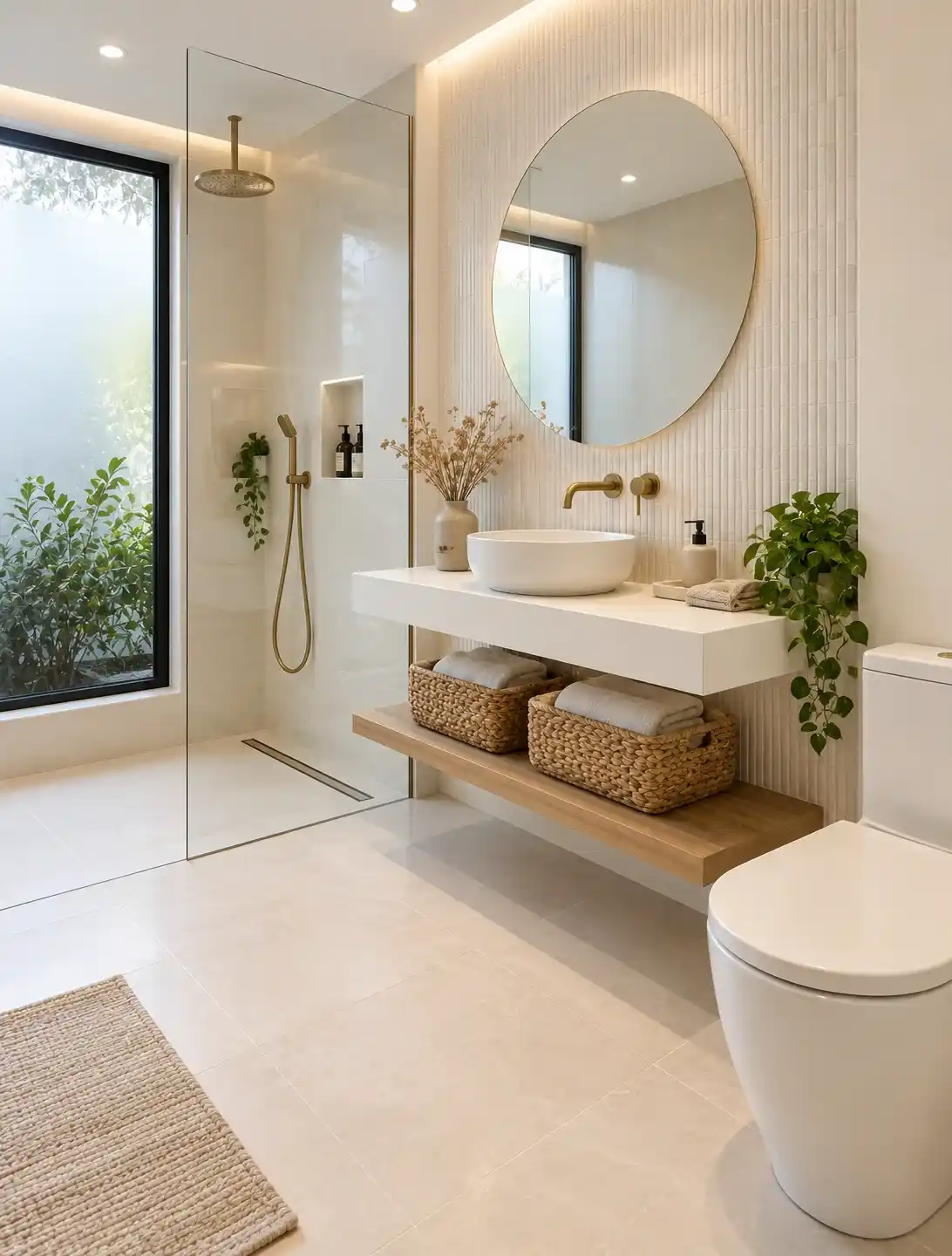
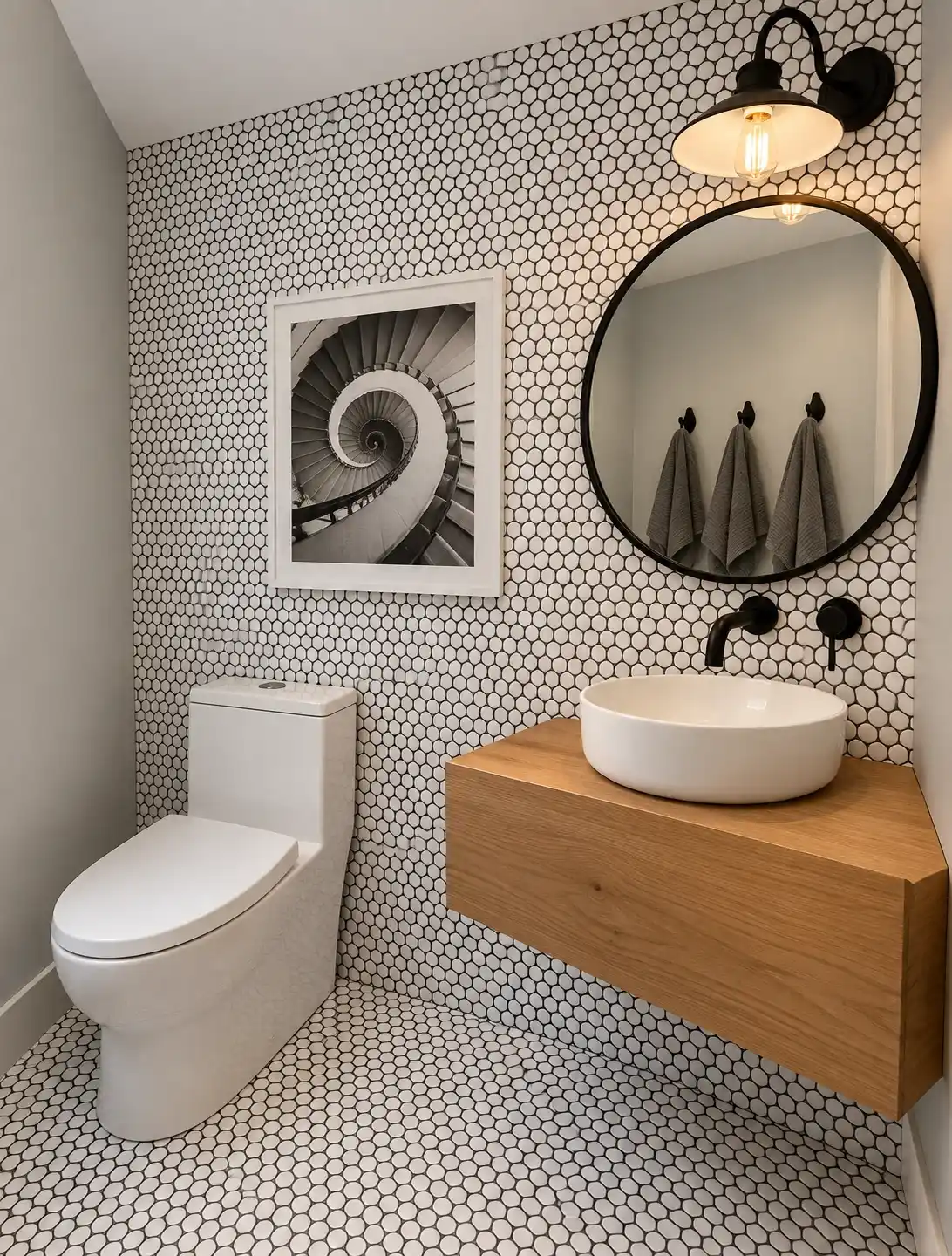
Warm minimalism tends to hold its appeal. Neutral tones, a touch of natural texture, and layered lighting feel current without depending on a single trend. Stark black-and-white contrast, cool lighting, and very sharp edges can feel dated faster, especially when the trend that inspired them peaks.
Materials make the difference over time. Porcelain tile, PVD fixtures, and well-installed sealed surfaces keep their appearance for years with routine care. Painted finishes, thin coatings, and poorly sealed stone show wear sooner and can make a room look tired.
For resale, the safest approach is to keep the palette neutral and the layout practical. Buyers respond well to clean, bright bathrooms, and they can be put off by a space that looks too stark or hard to live with. A minimalist room that still has a shower curtain rail, enough storage, and good lighting usually reads as desirable, not severe.
If you plan to sell within a few years, avoid bold accent colors tied to a single season, and make sure the storage is generous enough for a buyer to live with.
Does Minimalism Work for Your Bathroom?
Use these questions to test the idea before you commit.
- You have little storage and lots of daily items. Build in recessed or concealed storage before you choose finishes. Without it, the look will not last.
- The bathroom is shared by several people. Choose easy-clean surfaces, and give each person a closed storage space.
- You live in a hard-water area. Choose PVD fixtures over painted matte black, and plan regular descaling.
- The room is small and has no window. Use warm, layered lighting and a light, low-contrast palette so the room doesn’t feel cold.
- You plan to sell within three to five years. Keep the palette neutral and add one warm texture.
- You’re considering a wall-hung toilet or floating vanity in an older home. Check the wall construction and confirm the blocking and load capacity before buying.
- Your budget is limited. Spend on tile installation and fixtures rather than decorative accessories, which can be added later.
- You prefer warmth and natural materials. A Japandi or warm modern direction may suit you better than a stark minimal one.
Frequently Asked Questions
Q1: What makes a bathroom look minimalist rather than just empty?
A: A minimalist bathroom is planned, not bare. It uses a limited palette, simple shapes, and hidden storage, and it keeps visible objects to a few intentional pieces. An empty room often looks unfinished because it lacks texture, layered light, and well-chosen materials. The difference comes from the quality of the surfaces and the precision of the installation. Good tile joins, flush fittings, and a warm light source make the room feel considered. If yours feels cold and empty, the fix is usually better lighting and one textured element, not more decoration.
Q2: Will a minimalist bathroom look dated in a few years?
A: It depends on how stark the design is. Warm minimalism, with neutral tones, natural texture, and soft lighting, tends to age well because it doesn’t rely on one trend. Black-and-white schemes with cool light and very sharp contrast can feel dated faster. Choose finishes you’ll still like in five years, avoid accent colors tied to a single season, and keep the layout simple. Materials matter too. Well-installed porcelain and PVD fixtures hold their appearance far longer than painted or thin-coated finishes.
Q3: Can I achieve a minimalist bathroom on a DIY budget?
A: Some parts, yes. Painting, replacing hardware, adding a simple recessed niche in a dry wall, installing a basic floating shelf, and regrouting can all be done by a careful homeowner. Large-format tile is harder than it looks, since it needs a flat subfloor and careful layout to avoid lippage. Plumbing relocation, wall-hung toilet frames, and electrical lighting changes should be done by licensed trades. A realistic approach is to hire out the tile and any fixed plumbing work, then handle storage, accessories, and paint yourself. Expect the professional share to be the largest line in the budget.
Q4: Are matte black fixtures a good choice for a minimalist bathroom?
A: They suit the look, but the finish type matters more than the color. Painted matte black can chip and wear through, especially around handles and spouts. PVD-coated finishes resist wear much better. In hard-water areas, both matte and polished metals show mineral spotting, so plan to descale regularly. Matte finishes also show fingerprints and water marks differently from polished chrome, so check a sample in your bathroom’s actual light before you buy. If you’re unsure, brushed nickel or brushed brass in a PVD finish is a more forgiving choice.
Q5: Do floating vanities work in older homes or rentals?
A: They can, but the wall construction decides whether they’re safe and practical. Floating vanities need solid support, such as a stud wall with blocking, a masonry wall, or a reinforced frame. Plaster over brick or old lath can be fragile, and anchors may not hold the weight of a full vanity with a stone top. Before buying, check what the wall is made of, and have a plumber or carpenter confirm the load capacity. In a rental, a floating vanity usually needs landlord approval and may be hard to remove without damage. A freestanding or legged vanity can give a similar look with less risk.
Figures in this article are approximate U.S. ranges for 2026 and will vary by region, labor market, and scope. Slip ratings and electrical or plumbing requirements differ by country and local code. Check with a licensed professional and your local building authority before starting work.
 (1).webp)
 (1).webp)
_17_11zon.webp)
.webp)