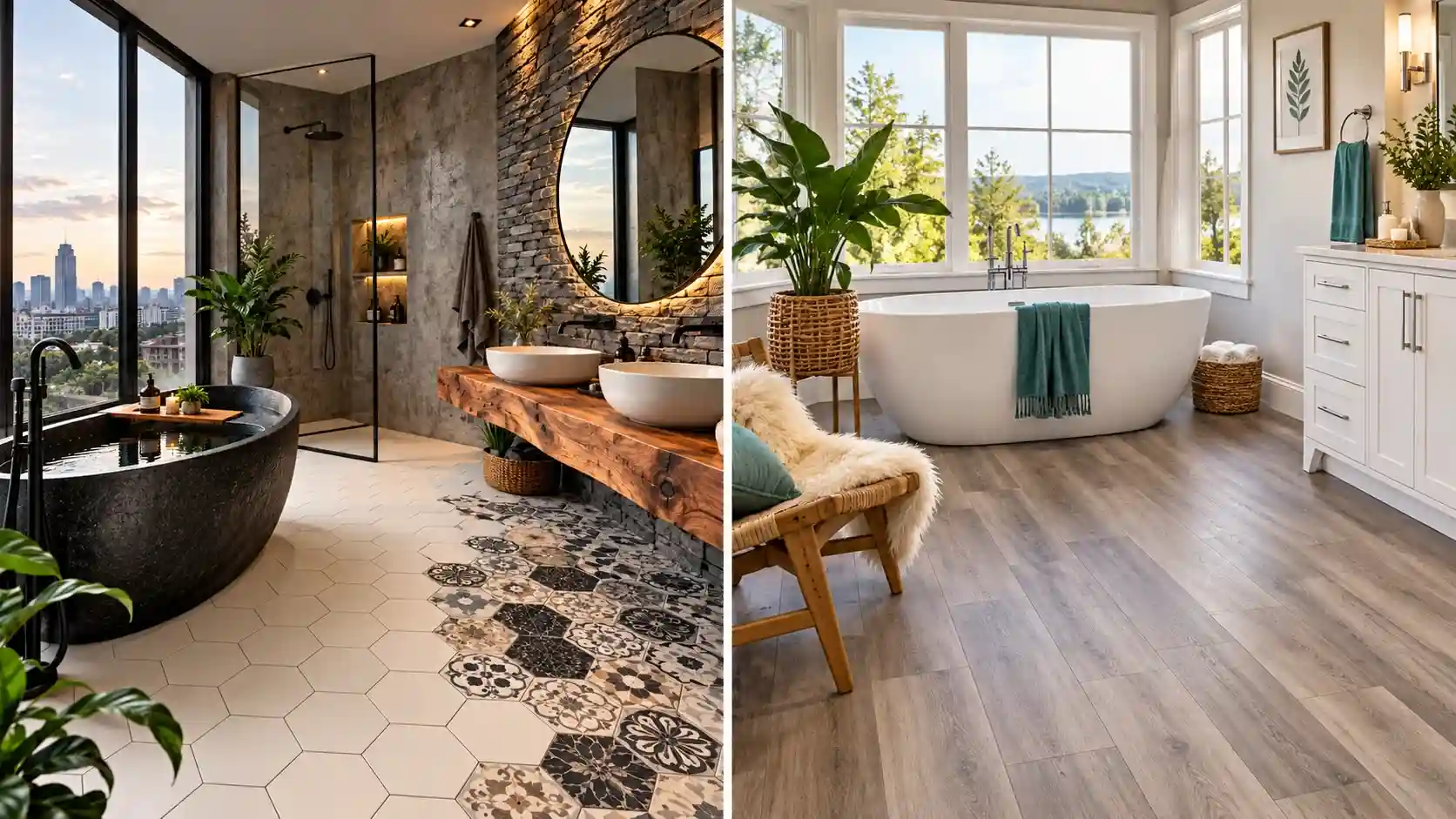
Quick answer: For most bathrooms, porcelain tile is the most durable choice, and rigid-core (SPC) luxury vinyl plank is the best budget-friendly waterproof option. Both depend on the subfloor and sealed edges beneath them, so installation matters as much as the material.
Most people shop for a bathroom floor by look and price. Then a contractor lifts the old one and the real question appears: what’s underneath? Bathroom floors rarely fail on the surface. They fail from below, through a slow leak at the toilet, a seam that lets shower splash through, or a joist that flexes under rigid tile. This guide compares the options with that in mind.
Quick takeaways
- “Waterproof” usually describes the surface layer, not the whole floor.
- Porcelain tile and sheet vinyl are the most forgiving in true wet zones. Click-lock vinyl plank suits dry-use bathrooms and powder rooms.
- Tile needs a stiff, flat subfloor. Vinyl tolerates imperfect floors better.
- New flooring raises the finished floor, which affects the toilet flange, doors and transitions.
- Removal, subfloor repair and levelling often cost more than the difference between materials.
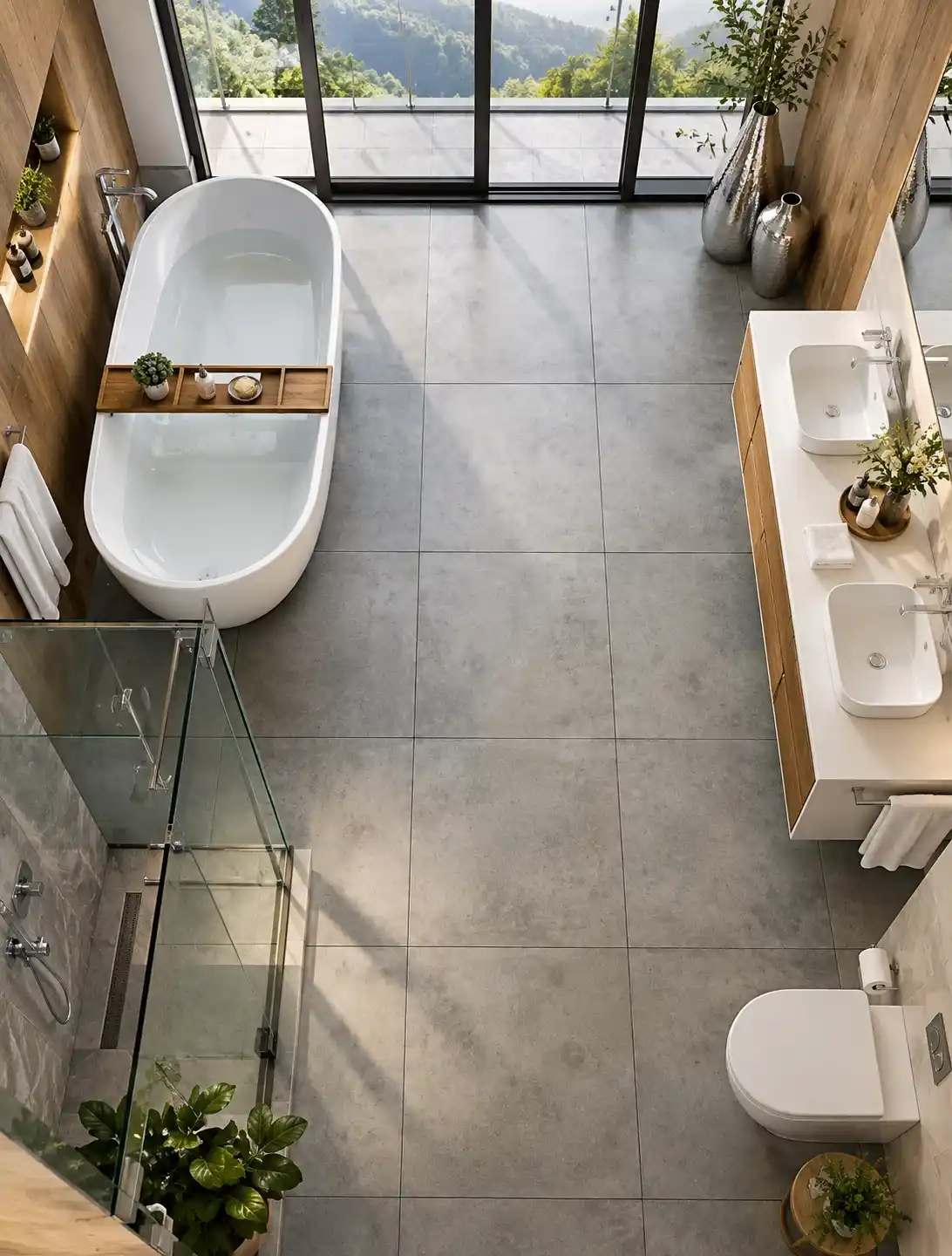
Waterproof Doesn’t Mean the Floor Is Waterproof
Here’s the plain definition. A waterproof material doesn’t absorb water or swell when wet. A waterproof floor is the material plus its seams, edges, fixture bases and the subfloor underneath.
Most homeowners don’t realize those are two different things. A rigid vinyl core won’t swell, but water doesn’t need to go through it. It goes around it: down a perimeter gap, along a seam, under the toilet base. Then it sits on plywood or chipboard where nobody can see it. Renovators often report finding soft subfloor under a spotless “waterproof” floor for exactly this reason.
Proper waterproofing treats the whole assembly, not just the top layer.
⚠️ Warning: A “waterproof” label usually covers the product, not the subfloor beneath it. Read the warranty for wet-area and standing-water exclusions before you buy. Some limit coverage in bathrooms or exclude areas around tubs and showers.
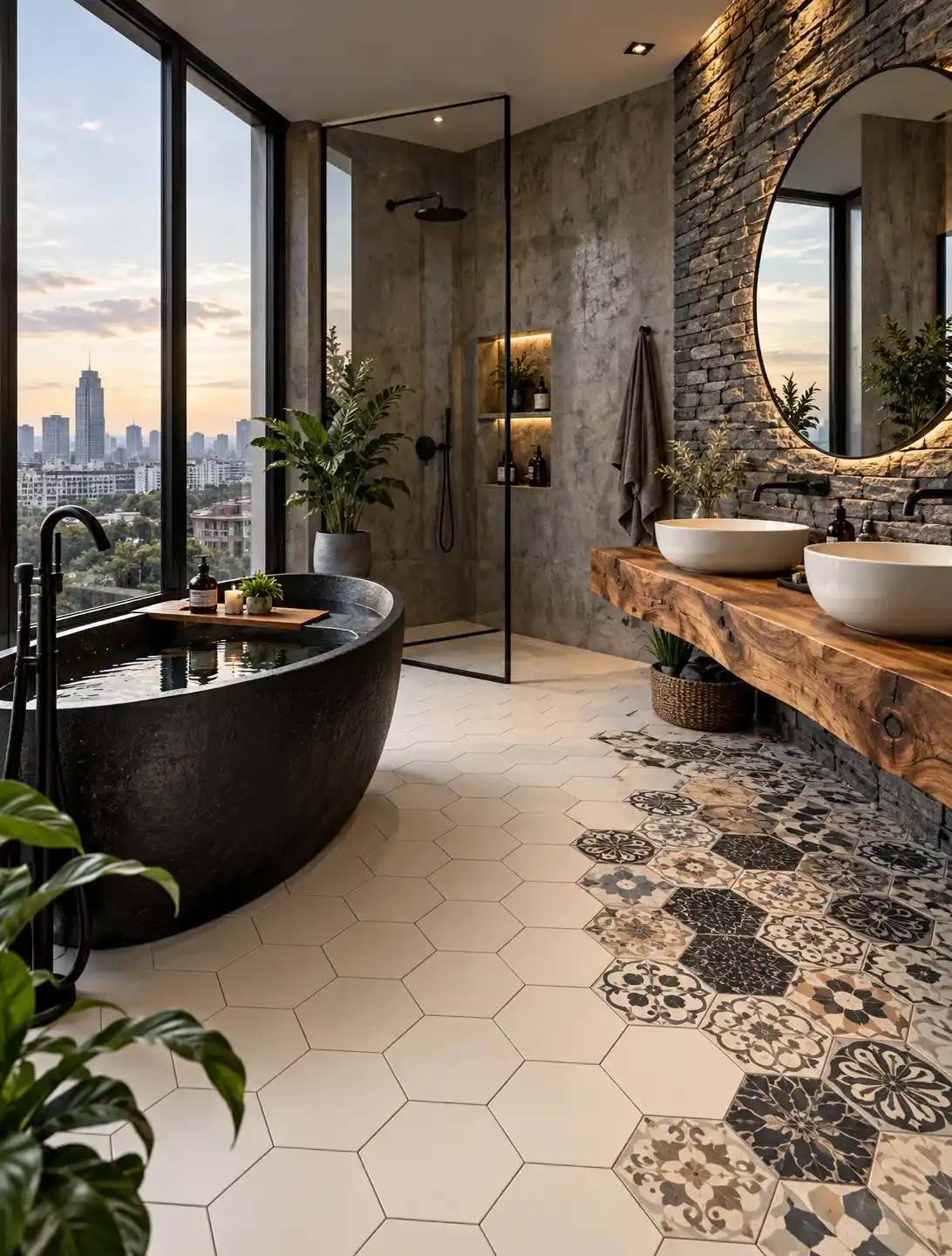
Bathroom Flooring Options Compared Side by Side
| Material | Waterproof as a material? | Subfloor demands | DIY difficulty | Verdict |
|---|---|---|---|---|
| Porcelain tile | Yes; grout and edges still need care | High: flat, stiff base | Hard | Best long-term choice for wet zones |
| Ceramic tile | Mostly; glaze chips and grout can admit water | High | Hard | Good, usually less durable than porcelain |
| Natural stone | No, porous unless sealed | Very high | Hard | Beautiful, high upkeep |
| Sheet vinyl | Yes; few seams means a nearly waterproof floor | Moderate: smooth, clean base | Moderate | Strong for tight budgets, rentals, small rooms |
| Rigid-core click vinyl (SPC/hybrid) | Yes; seams and edges are the weak point | Moderate: flat to manufacturer tolerance | Easy to moderate | Best DIY option for dry-use bathrooms |
| Glue-down LVT | Yes, if the bond is good | Moderate to high | Moderate | Good where click-lock edges worry you |
Skip carpet, solid wood, engineered wood and most laminate. They swell, rot or trap moisture.
Grout deserves a mention. Cement-based grout is porous and needs sealing, while epoxy grout resists stains and moisture but is less forgiving to install. On a tile floor, grout is usually the part that needs ongoing attention, not the tile.
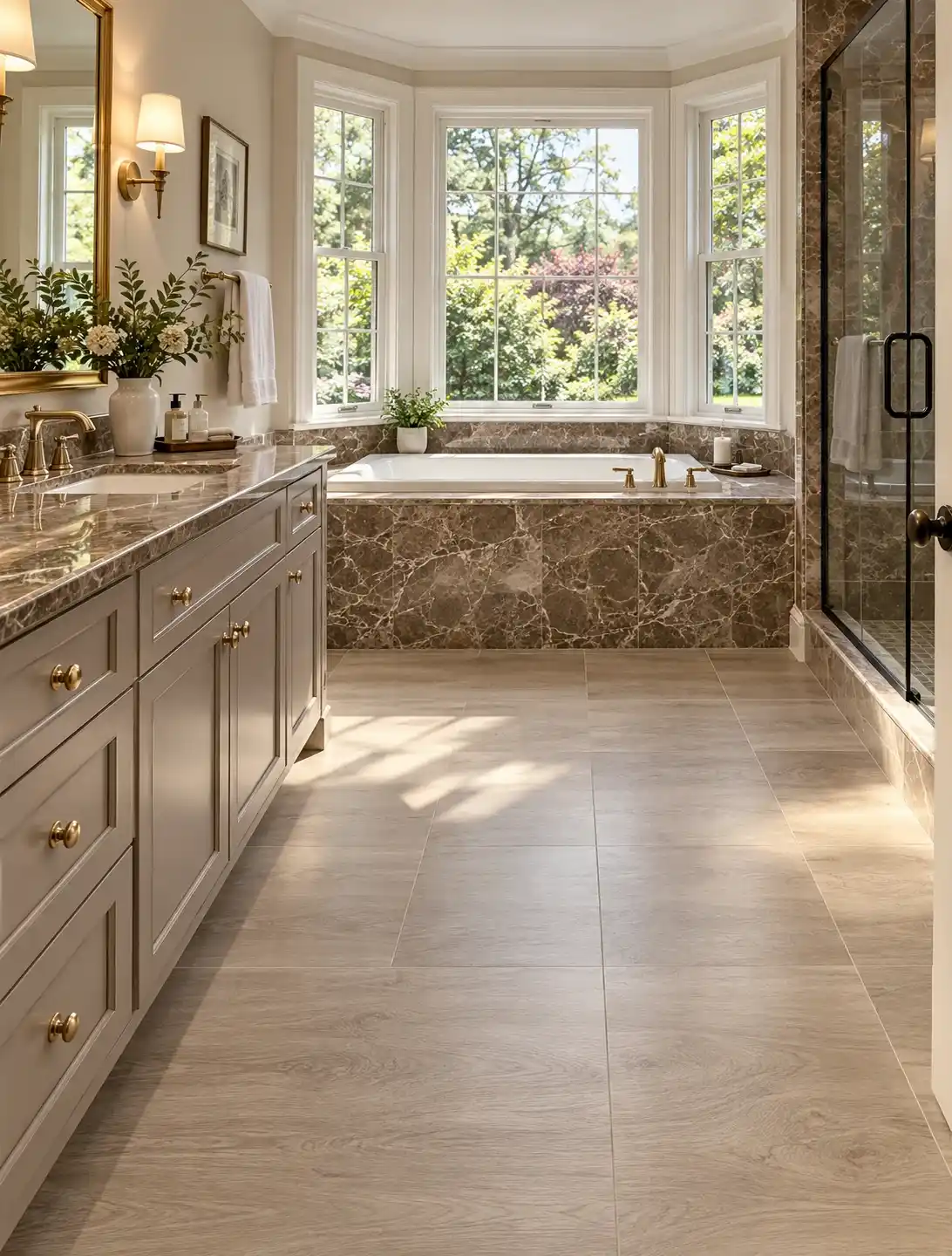
What Happens When Water Finds the Edge, the Seam, or the Toilet Base?
Floating click-lock floors have an awkward built-in conflict. They need a perimeter gap to expand and contract, but that same gap is a route for water. The usual fix is a flexible sealant under the trim, where the manufacturer’s installation guide allows it. That’s why the guide matters more than the box.
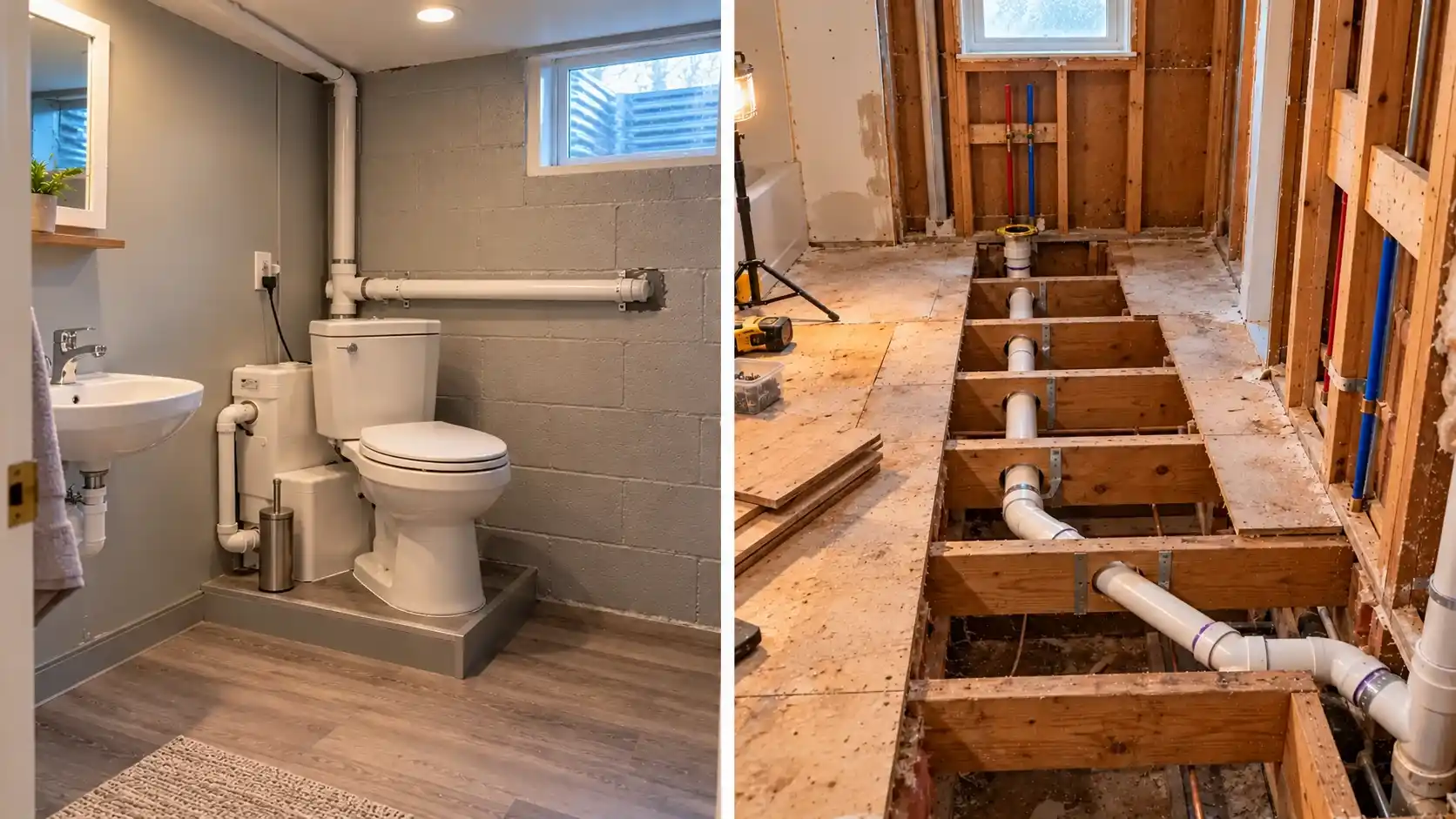
The toilet base is the other classic weak spot. Added flooring thickness lifts the finished level, and a flange that ends up below the new surface won’t seal well.
⚠️ Warning: If the toilet flange sits below the new floor, tightening bolts and stacking wax rings is not a safe fix. A poor seal leaks under the floor where you won’t see it. Use a flange extender or have a plumber check it.
A small smart water-leak sensor beside the toilet and tub is cheap insurance, especially with a new floor hiding what’s underneath.
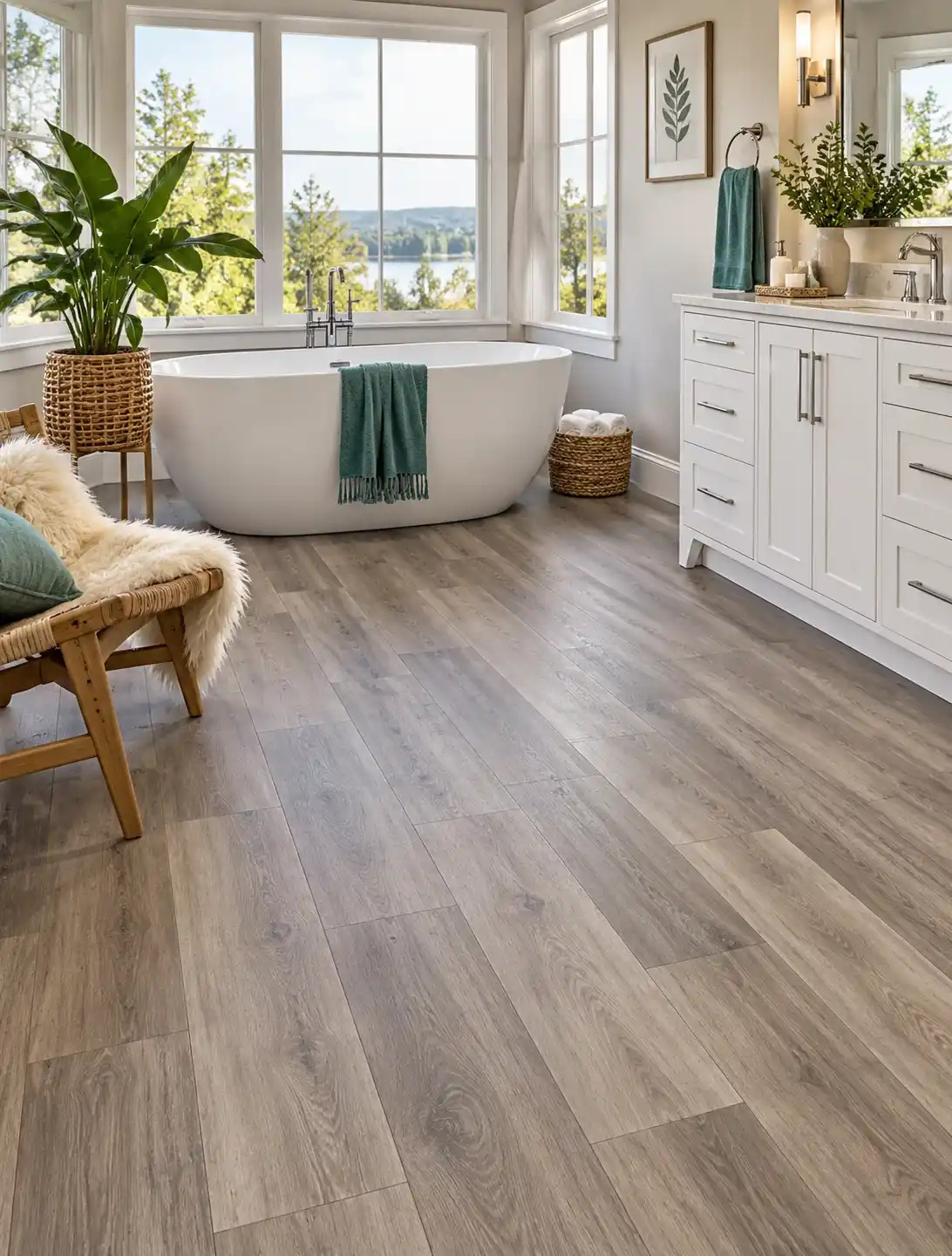
What daily use feels like:
- Tile: cold and hard underfoot, though heating helps. Ages well if the grout is maintained.
- Sheet vinyl: warmer and softer, very easy to clean, but can dent or tear under sharp or heavy objects.
- Click-lock plank: warm and quiet, but dirt and water tend to collect at the edges.
On slip safety, choose a matte or textured finish. US tile uses DCOF ratings (ANSI A326.3, commonly cited at 0.42 or higher for wet-walked interior floors, so verify with the supplier). The UK uses pendulum test values and Australia uses AS 4586 classifications. These labels don’t compare across countries, and a showroom sample won’t tell you how a floor feels with soapy feet.
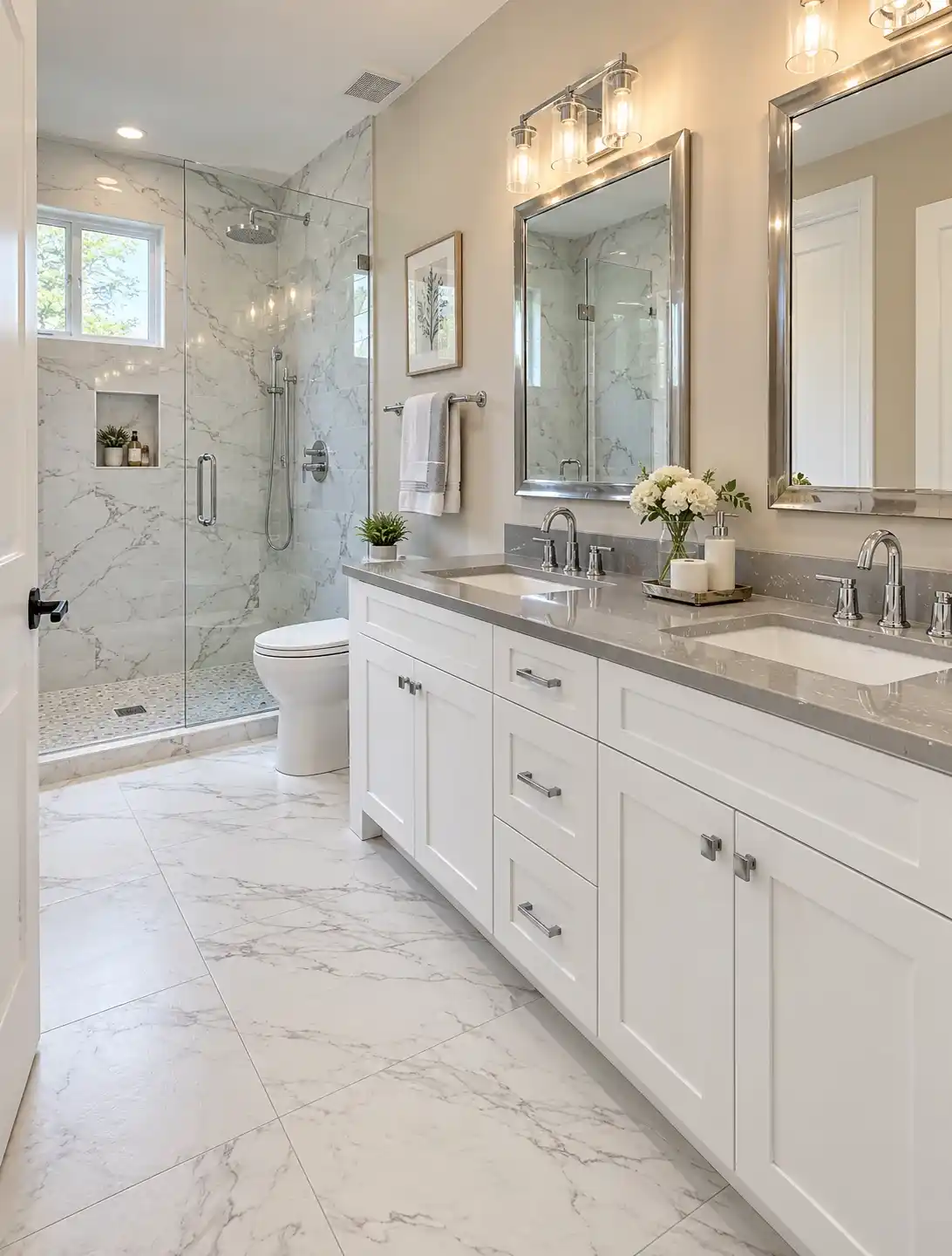
Which Floor Fits Which Bathroom?
- Tight budget, dry-use bathroom, sound subfloor: click-lock rigid-core vinyl with a sealed perimeter.
- Wet room, curbless shower or floor drain: tile on a proper waterproofing system, not a floating floor.
- Bouncy timber floor: fix the stiffness first, or choose sheet vinyl or glue-down LVT instead of tile.
- Young children, older adults or accessibility needs: matte, textured, slip-rated surfaces. Avoid polished tile.
- Rental or flip: sheet vinyl or glue-down LVT for durability and neutral appeal.
- Electric underfloor heating: tile is the most dependable fit. For vinyl, confirm the manufacturer’s heated-floor rating and maximum surface temperature first.
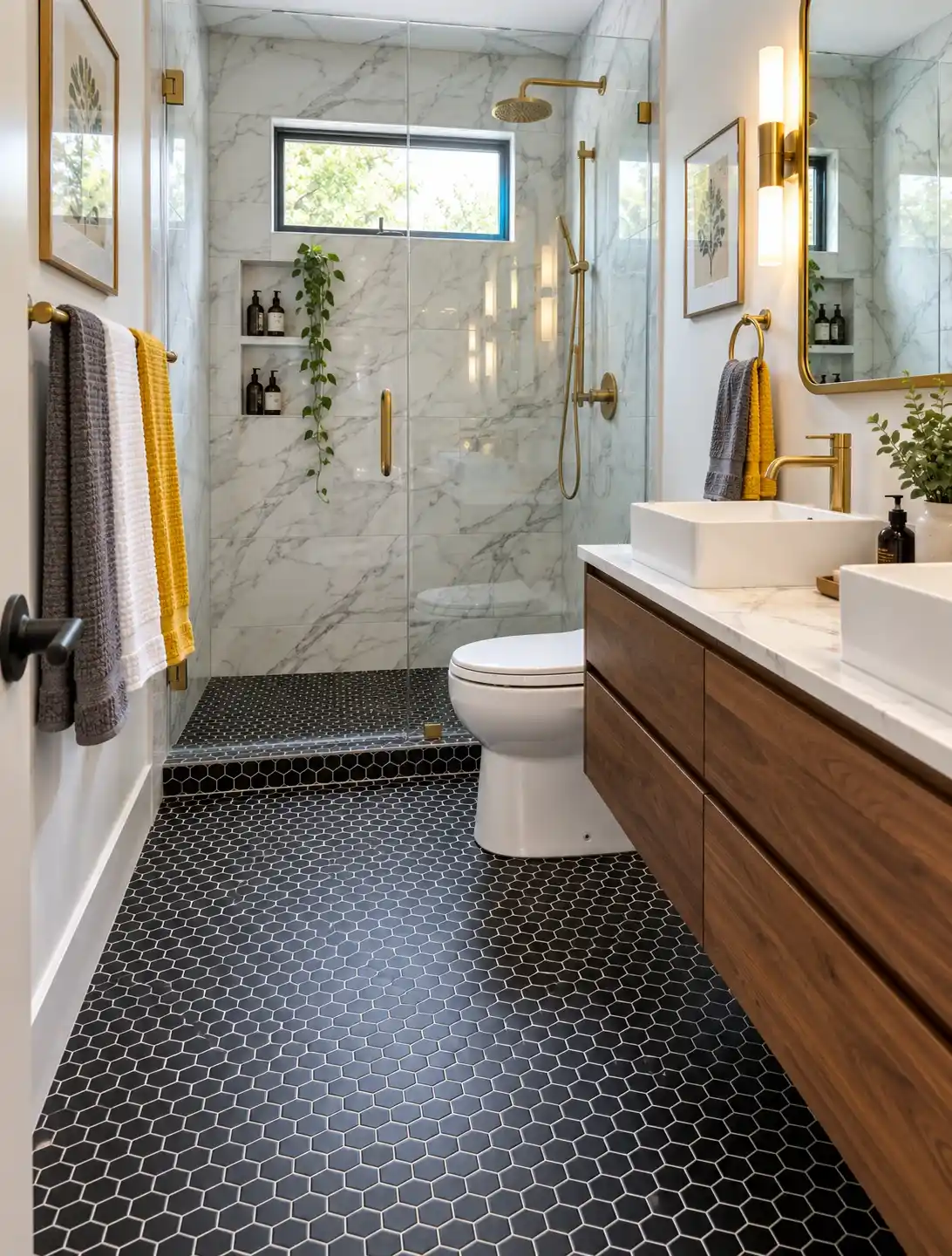
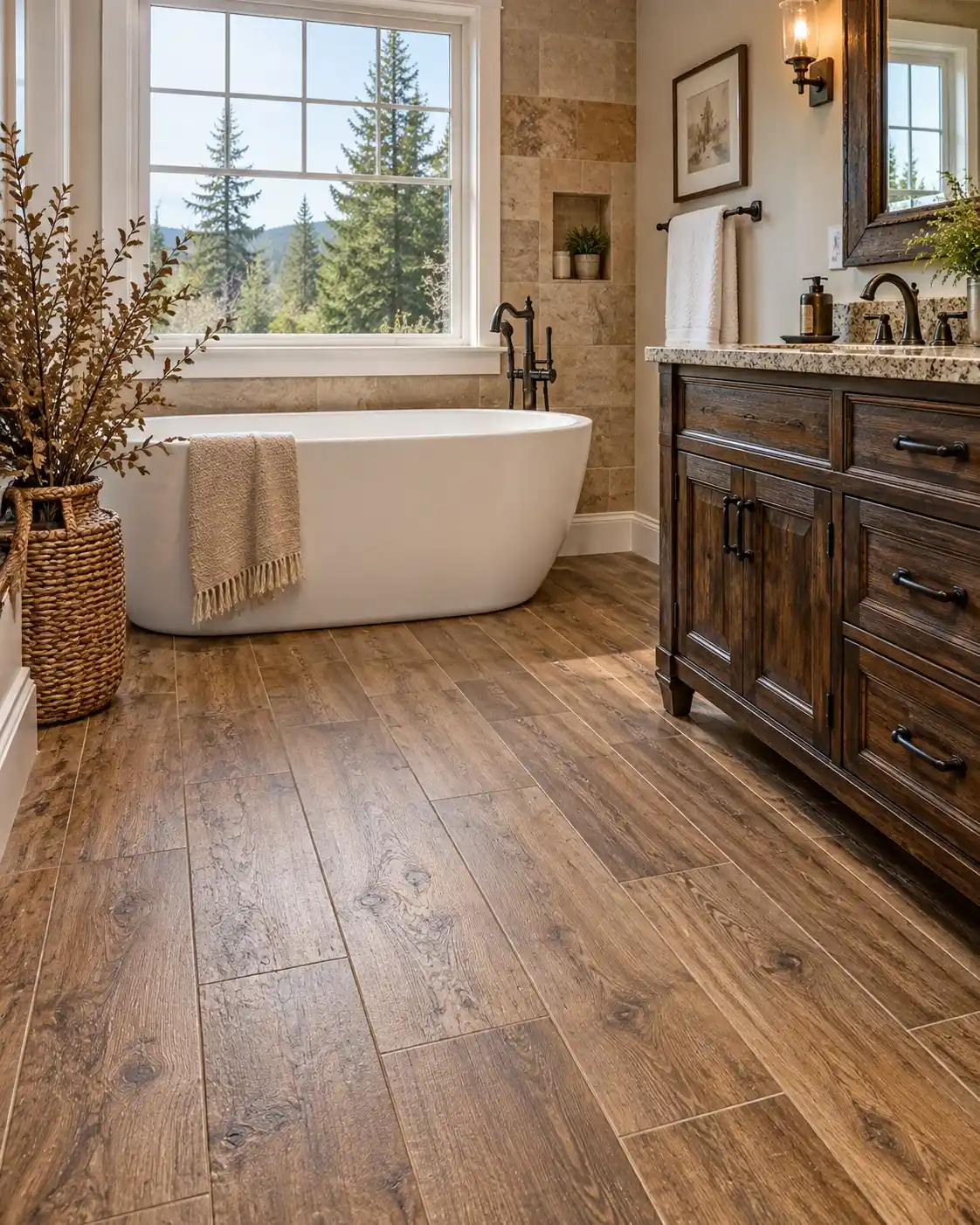
- Want a wood look with real durability: wood-look porcelain tile.
- Sound existing tile and tight height: ask whether flooring can go over it, and check grout-line depth and manufacturer guidance.
What Bathroom Flooring Costs Installed (and What Quotes Leave Out)
These are estimated ranges in USD, installed, per square foot unless noted.
| Line item | Low | Typical | High |
|---|---|---|---|
| Removal of old floor | $1 | $2 | $4 |
| Subfloor repair (affected area) | $2 | $5 | $12 |
| Levelling compound | $1 | $2 | $4 |
| Uncoupling or waterproofing membrane (tile) | $2 | $4 | $8 |
| Sheet vinyl | $3 | $5 | $9 |
| Click-lock rigid-core vinyl plank | $4 | $7 | $12 |
| Glue-down LVT | $5 | $8 | $13 |
| Porcelain or ceramic tile | $10 | $16 | $28 |
| Natural stone | $15 | $25 | $45 |
| Electric underfloor heating mat | $8 | $15 | $25 |
| Toilet removal and reset (each) | $100 | $200 | $350 |
| Trim, transitions, door undercut (per room) | $30 | $100 | $300 |
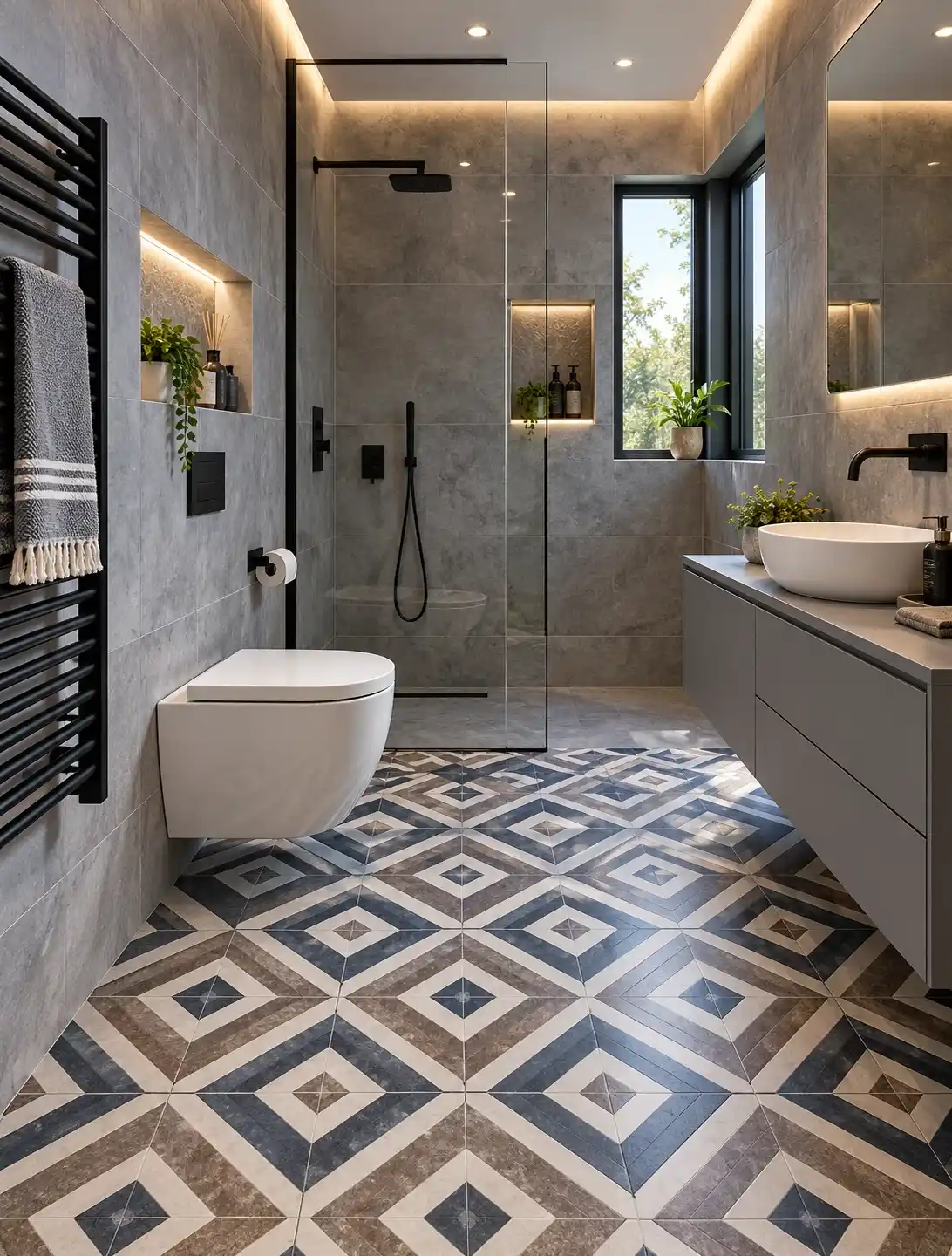
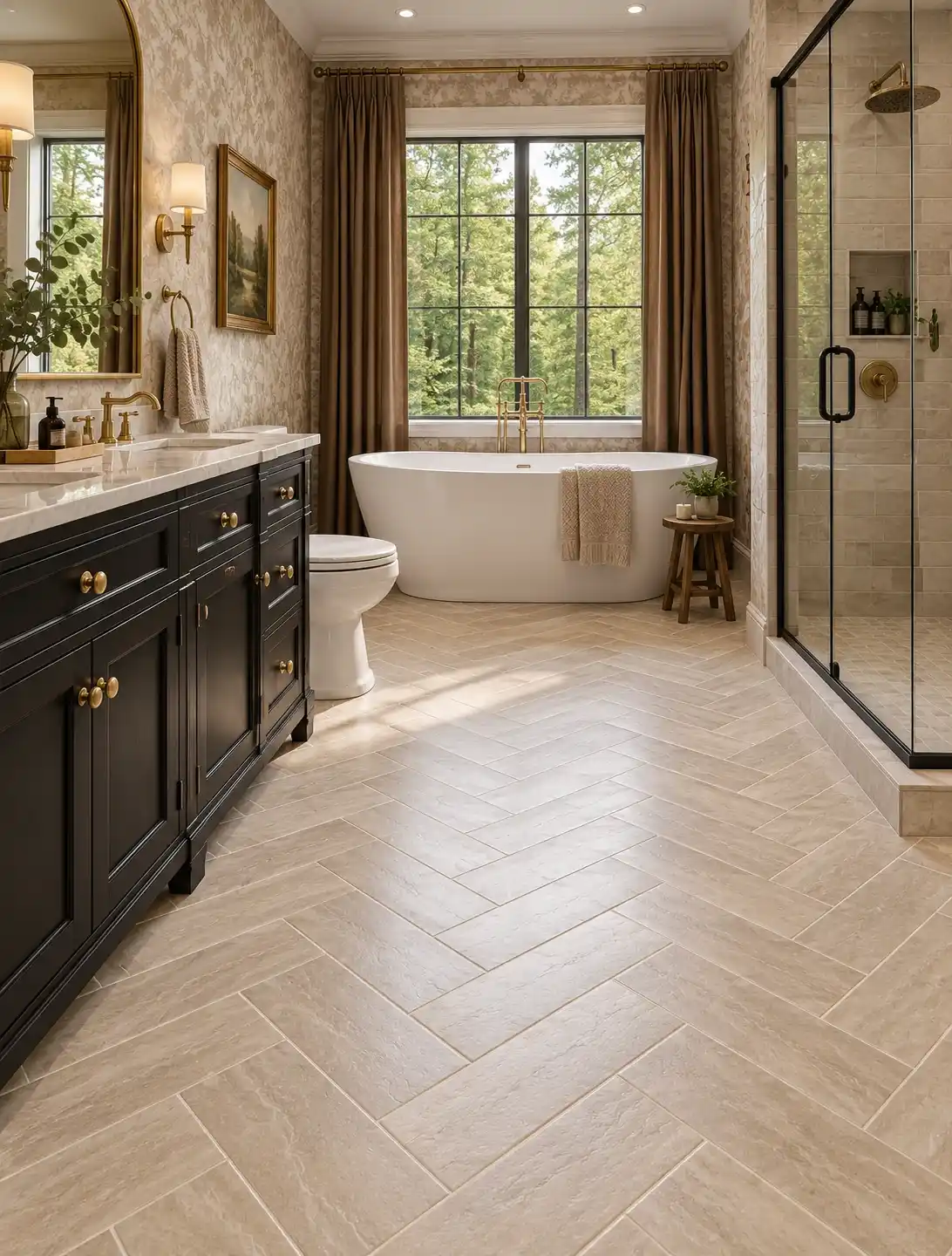
For a small 40 sq ft bathroom, vinyl options often land around $700 to $1,800 all-in and tile around $1,300 to $3,500. Small rooms usually cost more per square foot because installers apply minimum charges. Variance comes from access (stairs, upper floors), slab versus timber floor, your city, tile size and pattern, and the condition of the subfloor.
Resale: Buyers generally read tile as a premium finish and decent vinyl as acceptable in most mid-market homes. A lifting or poorly sealed vinyl floor hurts perceived value more than the material choice does.
Regional notes (verify locally):
- US: Priced per square foot. Metro labour rates vary widely, and electrical work such as underfloor heating may need a permit.
- UK: Priced per m² (about 10.76 sq ft). Labour is often lower than major US metros outside London. Underfloor heating wiring typically falls under Part P of the Building Regulations.
- Canada: Similar structure to the US but quoted in CAD, so nominal figures run higher. Provincial rules apply, and condo boards often set flooring and underlay rules.
- Australia: Labour is typically higher, and wet-area waterproofing rules under the NCC and AS standards are tightly enforced. Wet-area tiling generally needs licensed waterproofing.
Check These Before You Pull Up the Old Floor
Ten minutes of checking now can save a very expensive surprise later.
- Subfloor is dry, solid and free of soft spots, especially around the toilet and tub
- Floor is flat to the flooring manufacturer’s tolerance
- Joist spacing and flex suit tile, or an uncoupling layer is planned
- Concrete slab moisture has been tested, not assumed
- Shower type (curbless, floor drain, tray) matches the floor system
- Toilet flange height is checked against the new finished floor
- Door clearance and doorway transitions are measured
- Underfloor heating, if any, suits the flooring and its temperature limit
- Wet-area warranty terms are read
- Permit and inspection needs are confirmed locally
A basic moisture meter makes the first and fourth checks far less of a guess.
⚠️ Warning: In older homes, vinyl flooring and its adhesive may contain asbestos. Don’t sand, dry-scrape or break it up until it has been tested, and follow your local authority’s guidance.
DIY or professional? Sheet vinyl and click-lock plank are realistic for a careful DIYer on a sound floor. Call a pro for tile in wet zones, any soft or rotted subfloor, flange or plumbing changes, and electrical work for heating.
Frequently Asked Questions
Is waterproof vinyl plank really OK for a bathroom with a shower?
In most bathrooms, yes, if the room is dry-use or has a standard tray or curbed shower and the edges are sealed. The vinyl won’t swell, but water can still pass through seams and perimeter gaps. Avoid floating click-lock floors in wet rooms or curbless showers, and read the manufacturer’s wet-area terms before buying.
Can I put vinyl plank over existing tile or vinyl?
Sometimes. The old floor must be sound, dry and flat, and grout lines can show through if not filled. It also adds height, which affects doors, the flange and transitions. Check the installation guide, since some manufacturers require removal. If the old surface is cracked, damp or soft, remove it and fix the cause.
Is tile or vinyl better for resale and long-term ownership?
Tile reads as more premium and longer-lasting, but only with a stiff subfloor and maintained grout. Good sheet vinyl or rigid-core vinyl is perfectly acceptable in many mid-market homes and rentals. A neat, sealed vinyl floor usually helps resale more than cracked or stained tile. Match the choice to how long you’ll own the house.
What’s the safest bathroom flooring for avoiding slips?
Choose a matte or textured surface with a slip rating suited to wet use: DCOF in the US, pendulum test values in the UK, AS 4586 in Australia. Check ratings with the supplier. Small-format tile adds grout lines that increase grip, and textured sheet vinyl also works. Avoid polished or glossy surfaces, especially for children and older adults.
Can I use waterproof laminate, engineered wood or solid wood in a bathroom?
It’s best avoided. “Waterproof” laminate often has a fibreboard core that can swell when water reaches the edges, and wood can warp, stain or rot with repeated humidity. For a wood look, use wood-look porcelain tile or rigid-core vinyl plank. In a powder room, expect higher risk and check the warranty first.
 (1).webp)