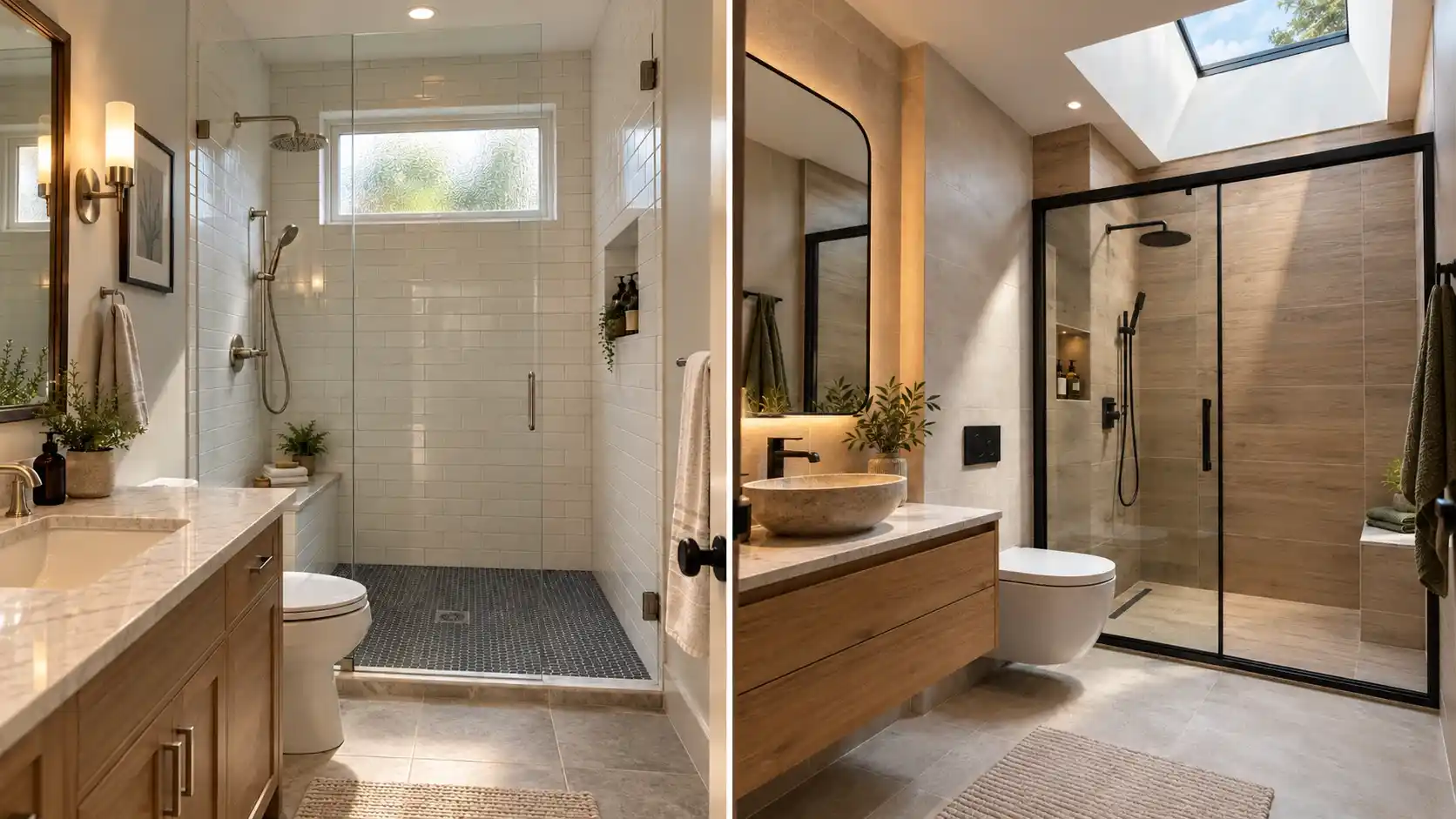
Privacy or Daylight? The Trade-Off Every Bathroom Window Forces
Short answer: Put the window on a wall that doesn’t face a neighbor’s windows or the street, set the sill around 5½–6 feet (1.7–1.8 m) above the floor, and use obscure glass or film. For night privacy, rely on glass or shades, not distance alone.
Every bathroom window pulls two ways. You want daylight, and you don’t want anyone watching you brush your teeth. Most homeowners solve it by frosting the whole pane, then wonder why the room feels like a cellar.
The better approach is to treat privacy as a placement problem first and a glass problem second.
Quick takeaways
- Work out who can see the window, and from where, before you buy anything.
- A high sill keeps light and blocks ground-level views. It’s a rule of thumb, not a code figure.
- Obscure glass works day and night. Reflective film often doesn’t.
- Keep windows out of the shower’s spray zone where you can.
- Moving a window is envelope work and costs far more than treating the glass.
- Safety glass, ventilation, and overlooking rules vary by country, so verify locally.
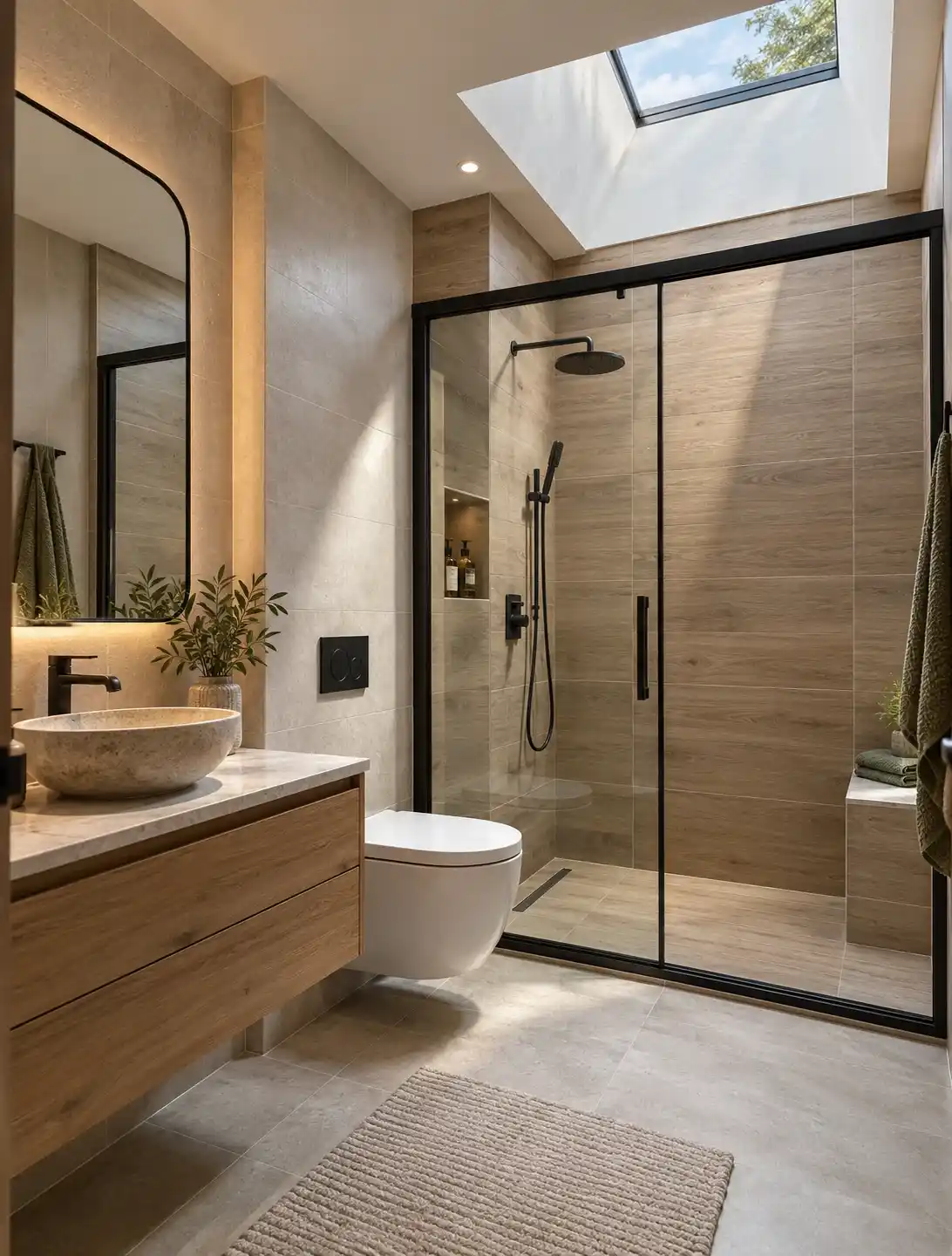
Start With Sight Lines, Not Glass
Stand at the window and look out. Then flip it: stand at the neighbor’s kitchen window, on the sidewalk, in the upstairs bedroom next door. Whatever you can see from there can see you. That angle is the real privacy measurement, and a well-placed clear window can beat a badly placed frosted one.
Eye height matters too. Sitting on the toilet, standing at the vanity, and standing in the shower expose different slices of the glass. Pick the sill height for whoever stands in front of that wall.
Common positions, and what each one costs you:
- Above the toilet: Seated eye level is low, so a high window works well here.
- Over the vanity: Great light for grooming, but splashes and a street-facing wall make it the most overlooked spot.
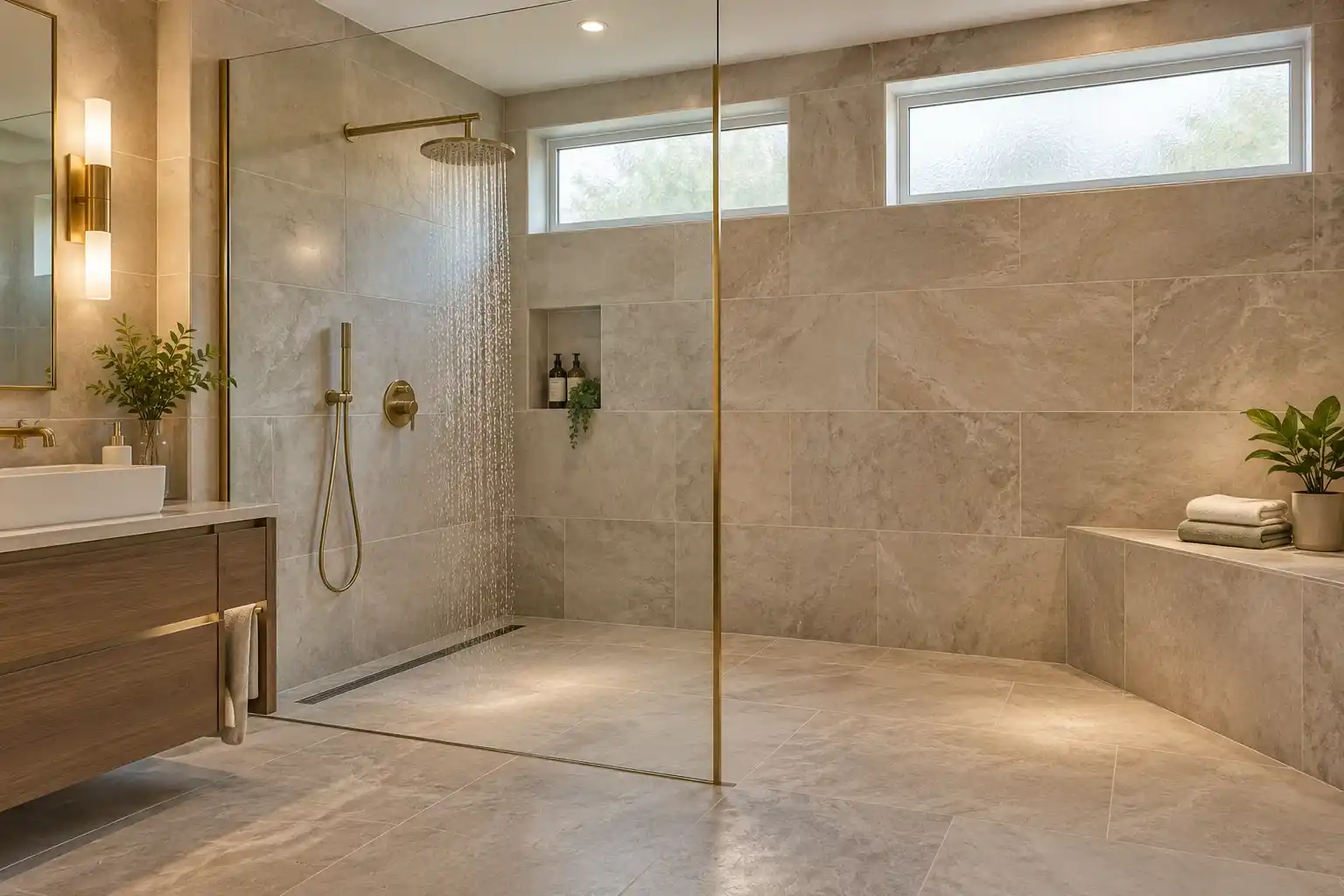
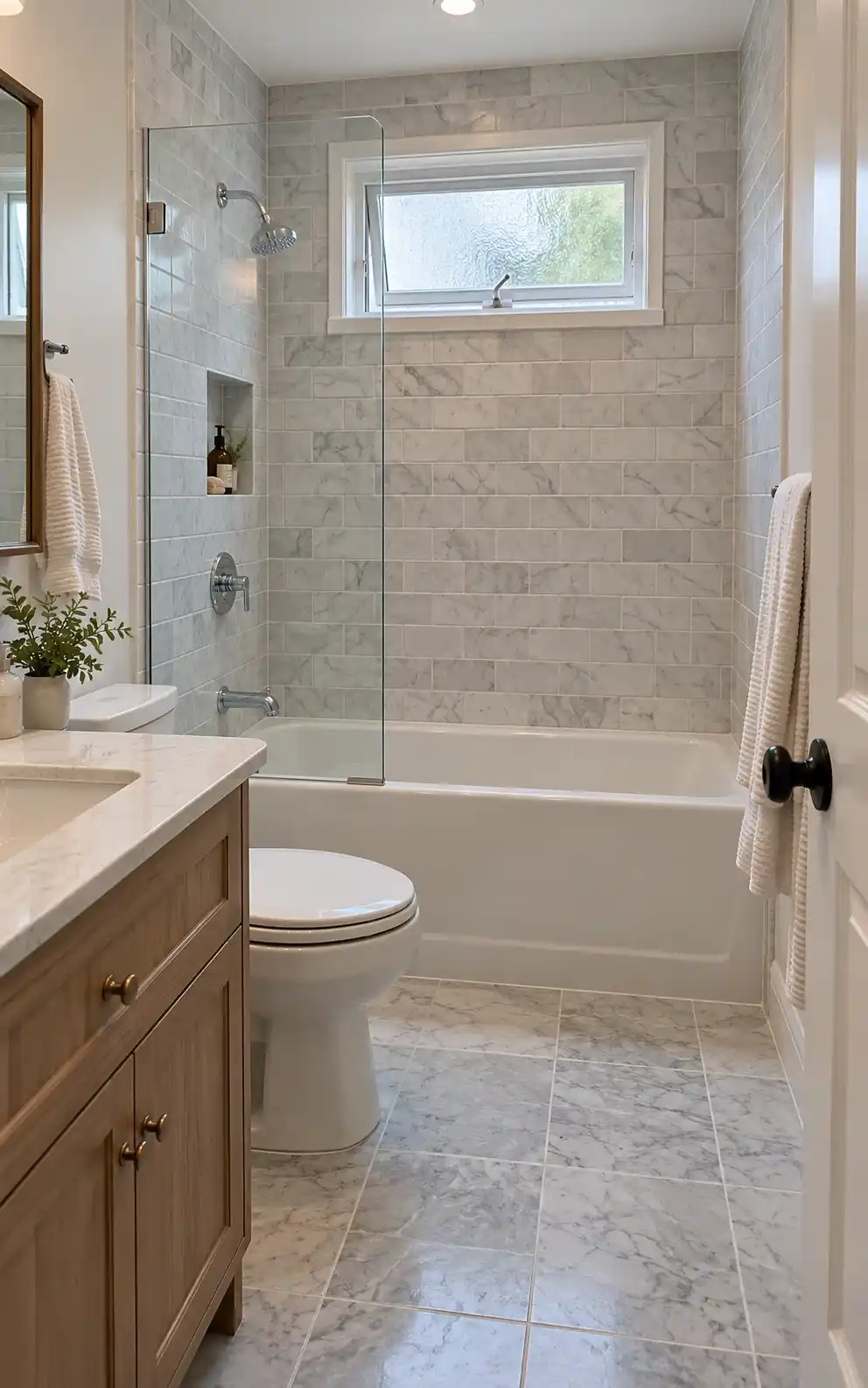
- High on the tub wall: Strong privacy and good light. Keep it clear of the direct spray.
- Clerestory strip: The sweet spot in larger rooms. It needs an opener you can actually reach.
- Corner window: Lovely, but it doubles the sight lines you have to manage.
- Side wall facing a neighbor: The classic problem wall. It usually needs obscure glass at any height.
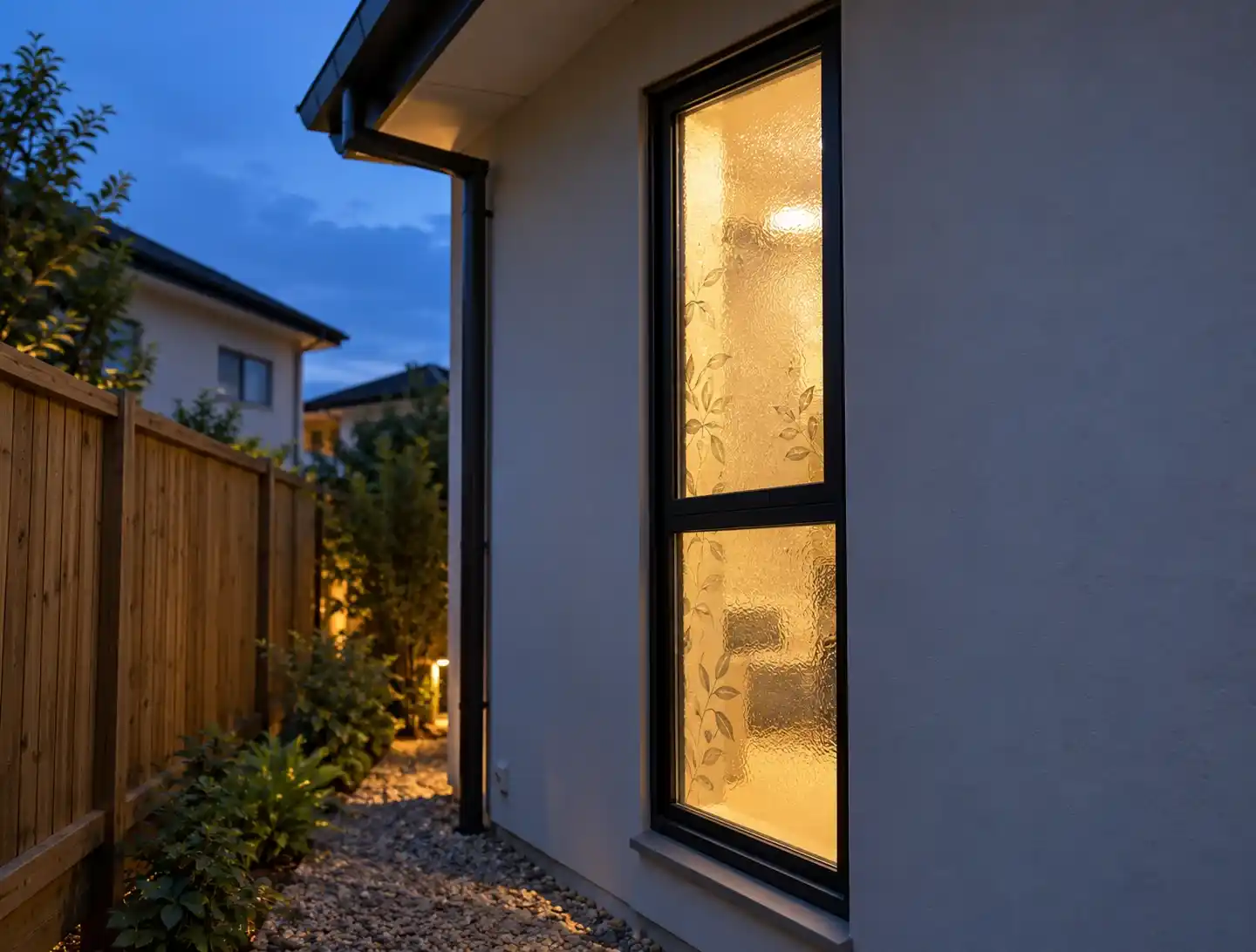
What Happens When the Light Goes On at Night
Most people test privacy in the afternoon. That’s the wrong test. At dusk, with a lit room behind it, a clear or reflective window turns into a lantern.
“One-way” reflective film is the usual culprit. It only hides you while the outside is brighter than the room, and at night that flips.
Holds up after dark:
- Obscure or patterned glass
- Moisture-rated shades (if someone closes them)
- Frosted adhesive film (not the reflective kind)
Often fails after dark:
- Reflective “one-way” film
- Clear glass behind a fence, when upstairs neighbors look down over it
Before you commit, stand outside after dark with the bathroom light on. Dimmable or smart bulbs help at night, but treat them as a backup, not the fix.
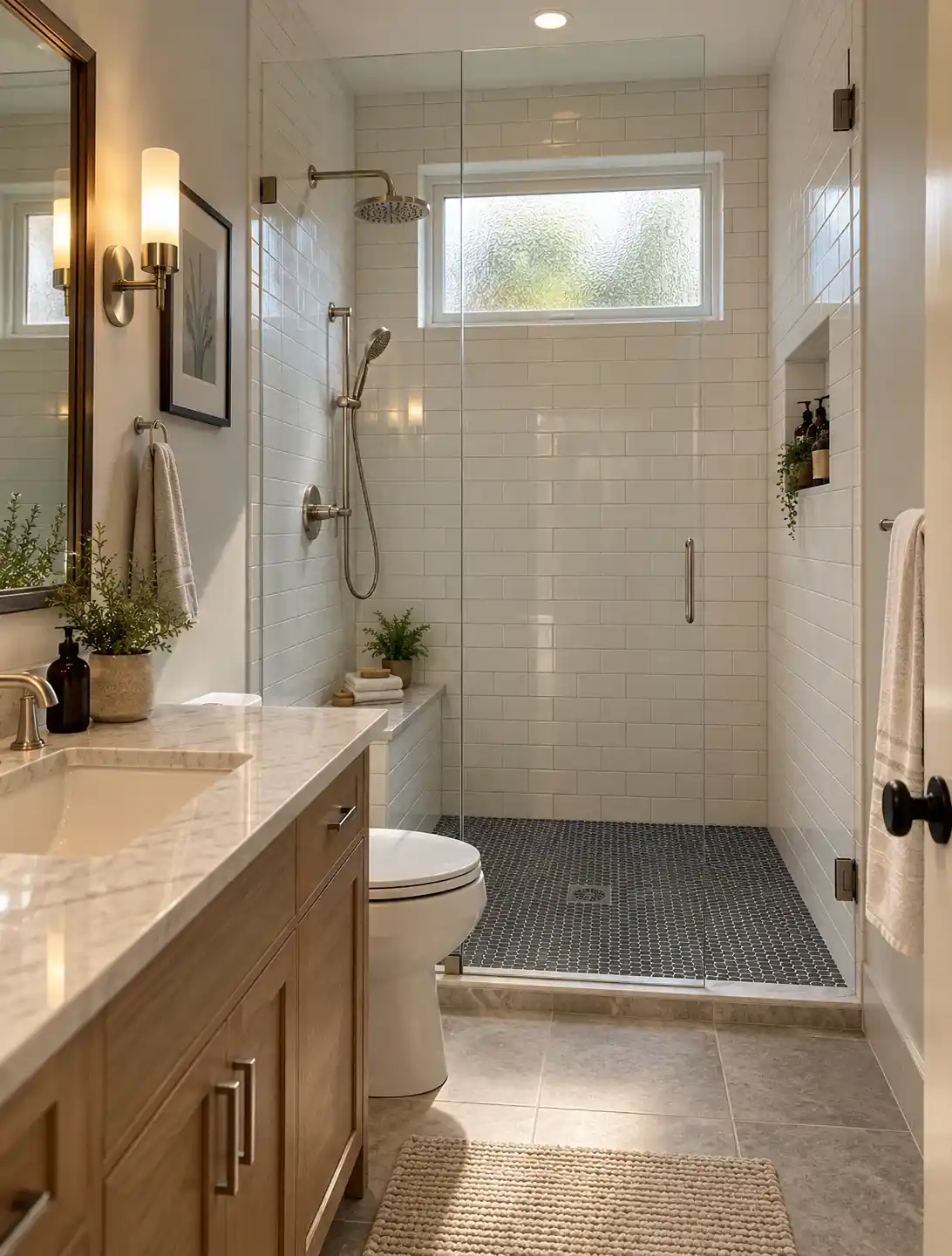
Three Real Rooms, Three Different Answers
A. Small 5 × 8 ft (1.5 × 2.4 m) tub-shower room, window on the short wall above the tub. A neighbor’s kitchen window sits about 10 ft away across a fence.
 SIDE YARD (neighbor ~10 ft away)
┌──────[ W high ]──────┐
│  ┌────────────────┐  │
│  │  TUB / SHOWER  │  │
│  └────────────────┘  │
│      [ TOILET ]      │
│      [ VANITY ]      │
└───────[ DOOR ]───────┘- Works: A high hopper or awning window with obscure glass, sill above standing eye level. No curtain needed.
- Avoid: A low clear window in the shower. It gives a direct sight line, and the sill sits in the spray.
- Daily use: A window you can’t reach stays shut. A crank or pole-operated hopper keeps it usable.
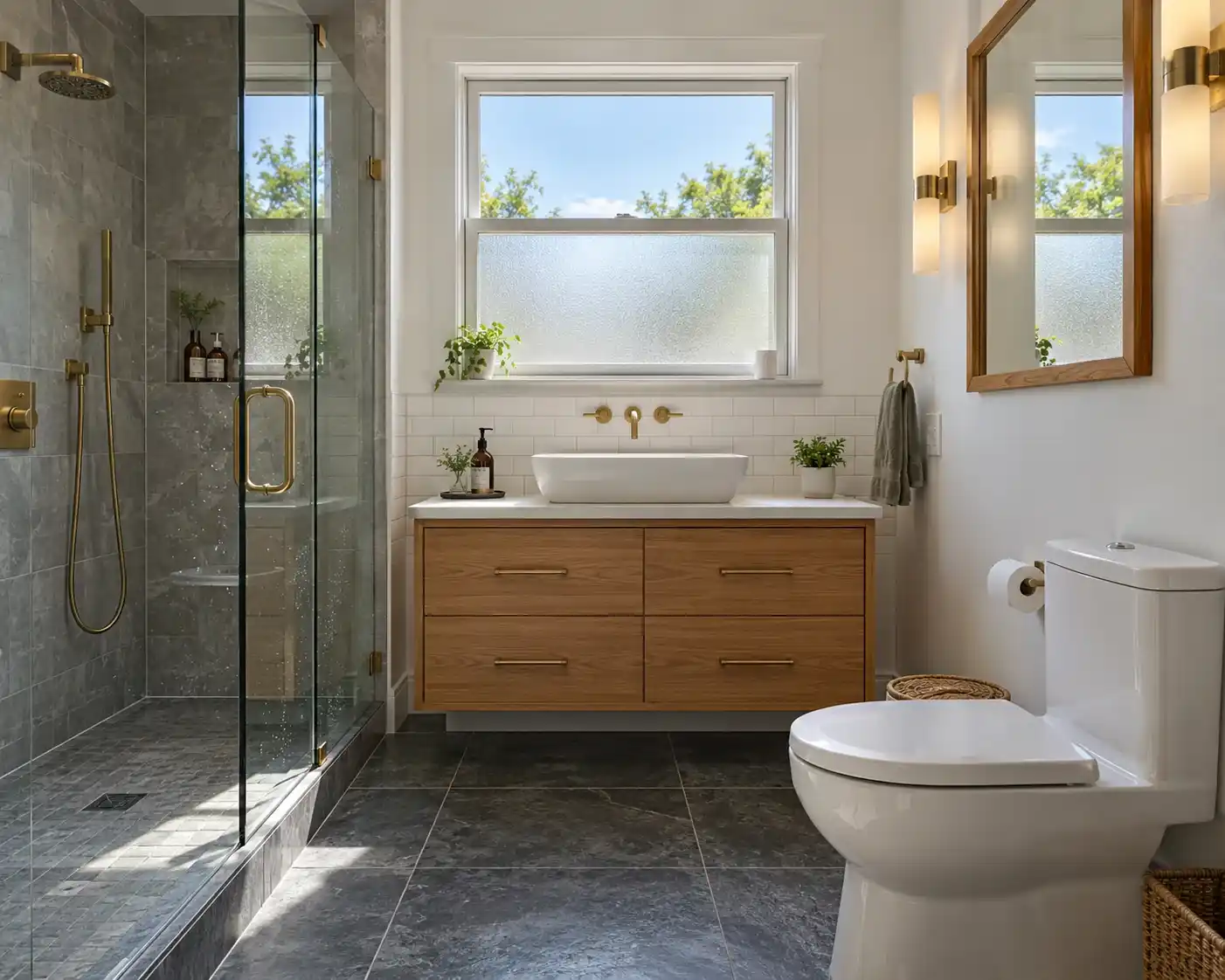
B. Standard 8 × 10 ft (2.4 × 3 m) room, window over the vanity on the back wall. The view is a back garden with a 6 ft fence and a neighbor’s upstairs bedroom beyond it.
┌────[ W over vanity ]───┐
│       [ VANITY ]       │
│                        │
│ [TOILET]     [SHOWER]  │
└──────── [ DOOR ] ──────┘- Works: Obscure lower sash, clear upper pane. The fence handles ground-level views and the clear top catches light.
- Avoid: Trusting the fence alone. The upstairs bedroom looks right over it.
- Daily use: It sits behind the faucet, so choose a sill and finish that shrug off splashes.
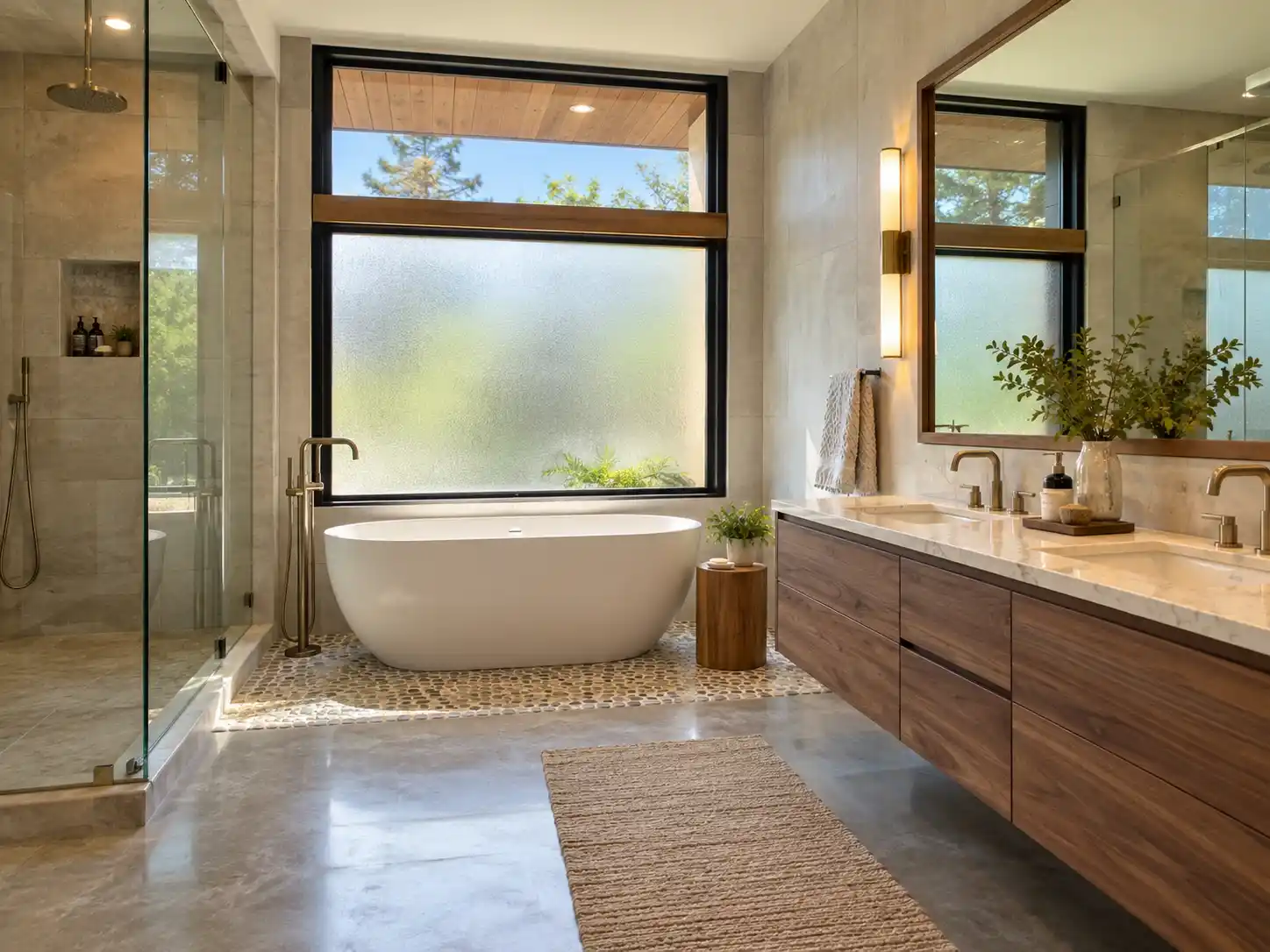
C. Larger 10 × 12 ft (3 × 3.7 m) ensuite, freestanding tub under a street-facing window.
┌──[ W ]──────[ W ]──┐  STREET
│    ( FREESTANDING  │
│         TUB )      │
│ [VANITY]  [VANITY] │
│ [SHOWER]  [TOILET] │
└───── [ DOOR ] ─────┘- Works: A high clerestory strip, or obscure or patterned glass plus an evening shade.
- Avoid: Big clear glass beside the tub on a street wall, with privacy left to a curtain someone has to remember.
- Daily use: Two people, two habits. Privacy that depends on remembering will fail eventually.
Fixes Ranked by Feasibility and Cost
Start at the top of this table and work down. Most bathrooms never need the bottom rows.
| Fix | Difficulty | Who does it | Estimated cost, USD (typical) | What drives the price |
|---|---|---|---|---|
| Privacy film | Easy | DIY | $15–$60 ($30) | Film type, window size |
| Moisture-rated shade or blind | Easy | DIY | $30–$300 ($100) | Size, motorization |
| Obscure glass in existing sash | Moderate | Glazier | $150–$600 ($350) | Window age, custom sizing |
| Whole window, obscure unit | Moderate | Window installer | $400–$1,500 ($800) | Size, spec, trim work, access |
| Glass block insert | Moderate to hard | Installer | $500–$1,800 ($1,000) | Opening size, weatherproofing |
| Solar tube | Moderate to hard | Roofer | $400–$1,200 ($800) | Roof pitch, attic access |
| Skylight | Hard | Roofer | $1,500–$4,500+ ($2,800) | Roof structure, flashing |
| Infill an unwanted window | Hard | Builder | $800–$3,500 ($2,000) | Exterior finish match, interior patching |
| Raise, resize, or move a window | Hard | Builder, sometimes an engineer | $1,500–$5,000+ ($3,000) | Wall type, header, cladding match, floor level |
Estimated ranges only. Confirm with local quotes.
In the UK, Canada, and Australia, expect similar orders of magnitude in local currency. Brick and cavity walls, common in the UK and Australia, push up the cost of any new opening because of lintels and brick matching. Cold-climate window specs lift Canadian prices.
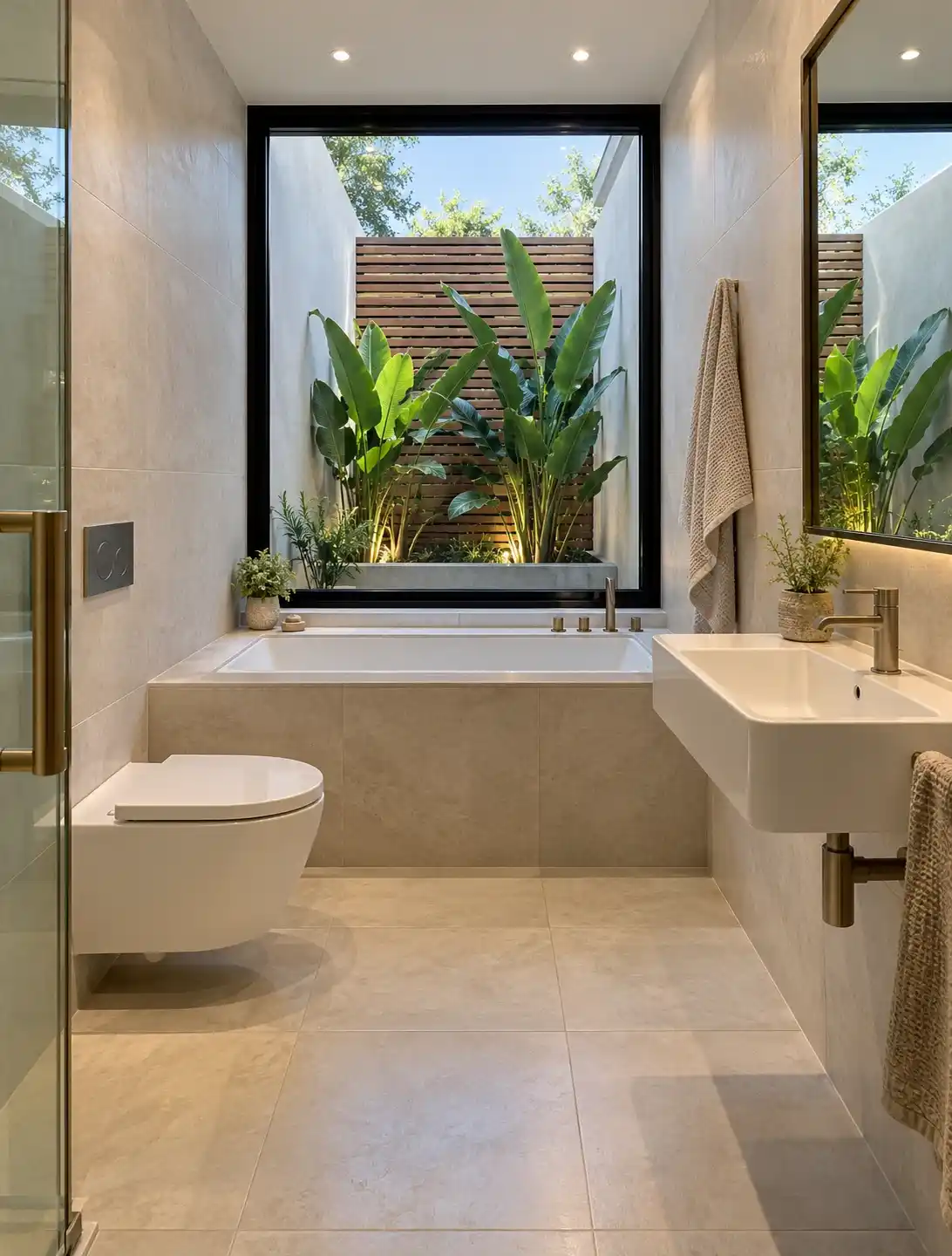
Most homeowners don’t realize that moving a window is mostly header, flashing, insulation, and matching the brick or siding. That often costs more than the window itself, which is why new glass in the existing opening is usually the smarter spend. Switchable “smart” privacy glass exists, but it’s a premium product that needs wiring, so it only makes sense when nothing simpler will do.
Safety Glass, Ventilation Credit, and Overlooking Rules by Country
Principles only where figures vary. Verify with your local building authority before you order glass.
| Area | US | UK | Canada | Australia |
|---|---|---|---|---|
| Window counts as ventilation? | IRC: about 3 sq ft of glazing, half openable, or a fan | Usually not; extract fan expected (Approved Document F) | Fan typically required in new homes | NCC: openable area or exhaust fan |
| Safety glass near tub or shower | Hazardous-location rule (IRC) | “Critical locations” (Approved Document K) | Generally required (NBC and provincial codes) | AS 1288 |
| Neighbor overlooking | Local or HOA rules | Side-facing upper windows often need obscure glass (planning) | Municipal bylaws | State and council rules |
| Permit to change the opening | Usually, if structural or exterior | Often building regs, sometimes planning | Usually, if structural | Usually, via council |
⚠️ Warning: A window in the shower’s spray zone is a common hidden mold source. Check the sill slope and the sealed reveal before you trust it.⚠️ Warning: “One-way” film hides you only while the outside is brighter than the room. Test it after dark.⚠️ Warning: Swapping an openable window for a fixed obscure one can cost you ventilation credit, and you may need a bigger fan.
Quick Decision Guide: If Your Window Is X, Do Y
- A neighbor or the street sees it directly: Use obscure glass. Move the opening only if the wall is easy to rework.
- Low window over the shower or tub: Replace it with safety obscure glass or raise it. Don’t rely on film alone.
- High window and you want light: Keep it clear or lightly obscure, and add a shade for nights.
- Privacy is only a problem at night: Choose patterned glass or a shade. Skip reflective film.
- Tight budget: Try film or a moisture-rated shade first, and live with it for a month.
- Replacing the window anyway: Order obscure glass now. Retrofitting later costs more.
- Load-bearing wall, or you want it bigger: Bring in a builder or structural engineer.
- The room would end up with no daylight: Keep a window with obscure glass. Buyers often react badly to windowless bathrooms.
When to call a professional: Any change to the opening’s size or position, work above the first floor, or signs of water damage around the existing window.
FAQ
Where is the best place for a window in a bathroom for privacy?
High on a wall that doesn’t face a neighbor’s windows or the street. A clerestory or high awning window above the tub wall or toilet keeps daylight without giving views at eye level. If the wall does face a sight line, use obscure glass rather than trusting distance or a fence.
How high should a bathroom window be for privacy?
A common rule of thumb is a sill around standing eye level or higher, roughly 5½–6 feet (1.7–1.8 m) above the floor. It’s a design guideline, not a code figure. Upper-floor neighbors can still look down into it, so add obscure glass if one overlooks you.
Is frosted glass or privacy film better for a bathroom window?
Obscure or patterned glass is permanent and works day and night. Film is cheaper and removable, but it can peel in steam, and reflective types fail at night. Replacing the window anyway? Choose glass. Keeping an existing window on a budget? A quality frosted adhesive film is a fair start.
Can people see into my bathroom window at night with the light on?
Yes, if the glass is clear or has reflective film. A lit room against a dark exterior turns the window into a display. Obscure glass, patterned glass, and shades keep working at night, while “one-way” film generally doesn’t. Test after dark before you rely on any fix.
Can I put a window in a shower or over a bathtub?
Often yes, with extra care. Expect safety glazing, a sloped and waterproofed sill, and a plan for condensation. Many pros prefer a high window outside the direct spray. Check your local code for glazing near tubs and showers before you order.
Do I need a permit to change or move a bathroom window?
Swapping the glass or the unit in the same opening often doesn’t need one, though local rules vary. Resizing or moving the opening usually does, since it touches the structure and the building envelope. In the UK and Australia, planning or council rules may apply too. Verify with your local building authority first.
Layout, Space & Structural Considerations
- Minimum Size for a Full Bathroom: The Real Numbers (and Why Code Minimum Isn’t the Whole Story)
- How to Make a Small Bathroom Feel Bigger: Layout Fixes Ranked by Impact and Cost
- How Much Does It Cost to Move Plumbing in a Bathroom Remodel? (Estimated Ranges by Type of Move)
- Converting a Tub to a Shower: Does It Hurt Resale Value?
- How Much Does It Cost to Add a Bathroom to a House?
- Half Bath vs. 3/4 Bath: What’s the Real Difference (and Does It Count as a Full Bathroom?)
- What Size Exhaust Fan Do I Need for My Bathroom? (CFM, L/s and Real-World Adjustments)
- ADA Bathroom Requirements: What the Rules Say and What Actually Applies to Your Home
- What Is a Wet Room? How It Differs From a Walk-In Shower (and Whether Your House Can Take One)
- Bathroom Window Placement and Privacy: Where Windows Should Go (and How to Fix the Ones in the Wrong Spot)
.webp)
.webp)
.webp)
 (1).webp)